

Press-formed blanks at the end of a press line require careful component handling without any loss of cycle time, as well as alternative stacking and logistics concepts in the end-of-line (EoL) area.
End of Line Systems (EoL)
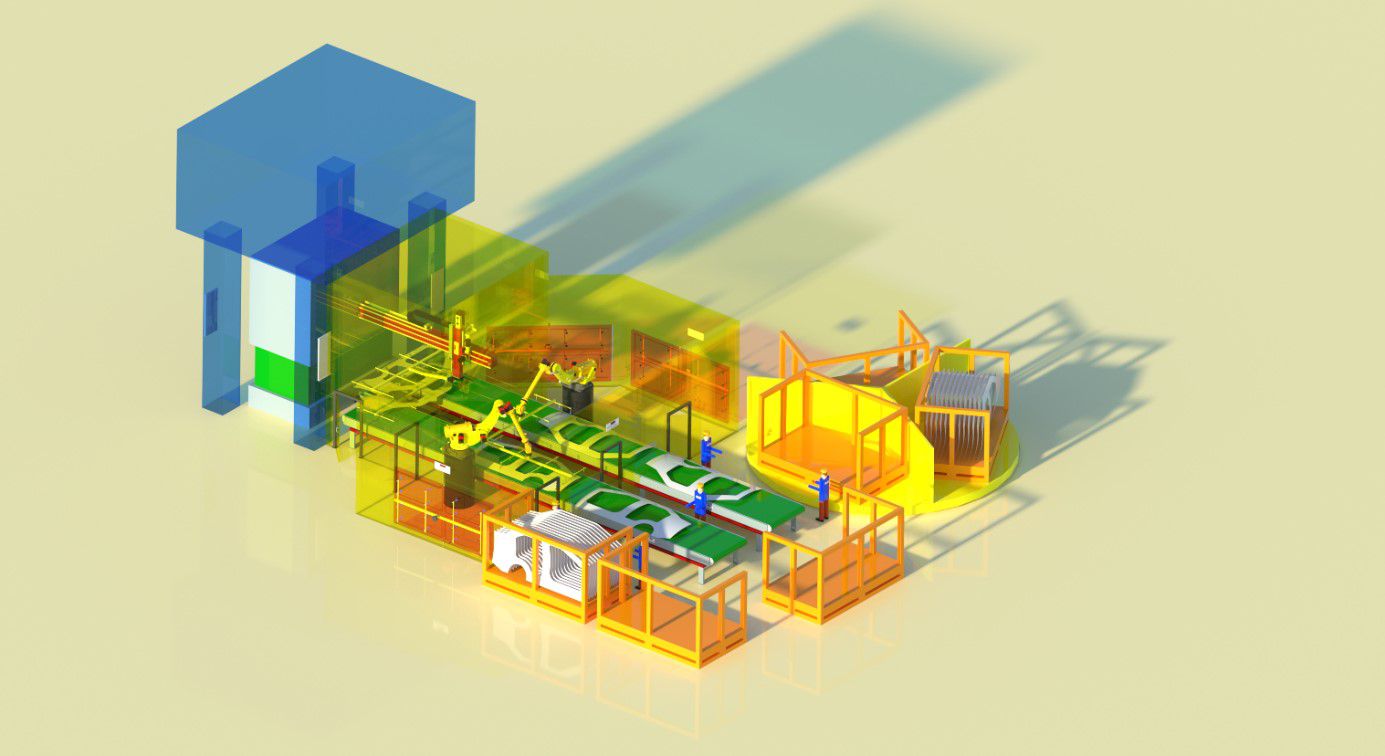
HORSTKEMPER supplies the complete system peripherals for this purpose—from the outfeed conveyor to the automatic stacking system, including quality inspection of the components—drawing on its extensive experience with stacking systems in other industries.
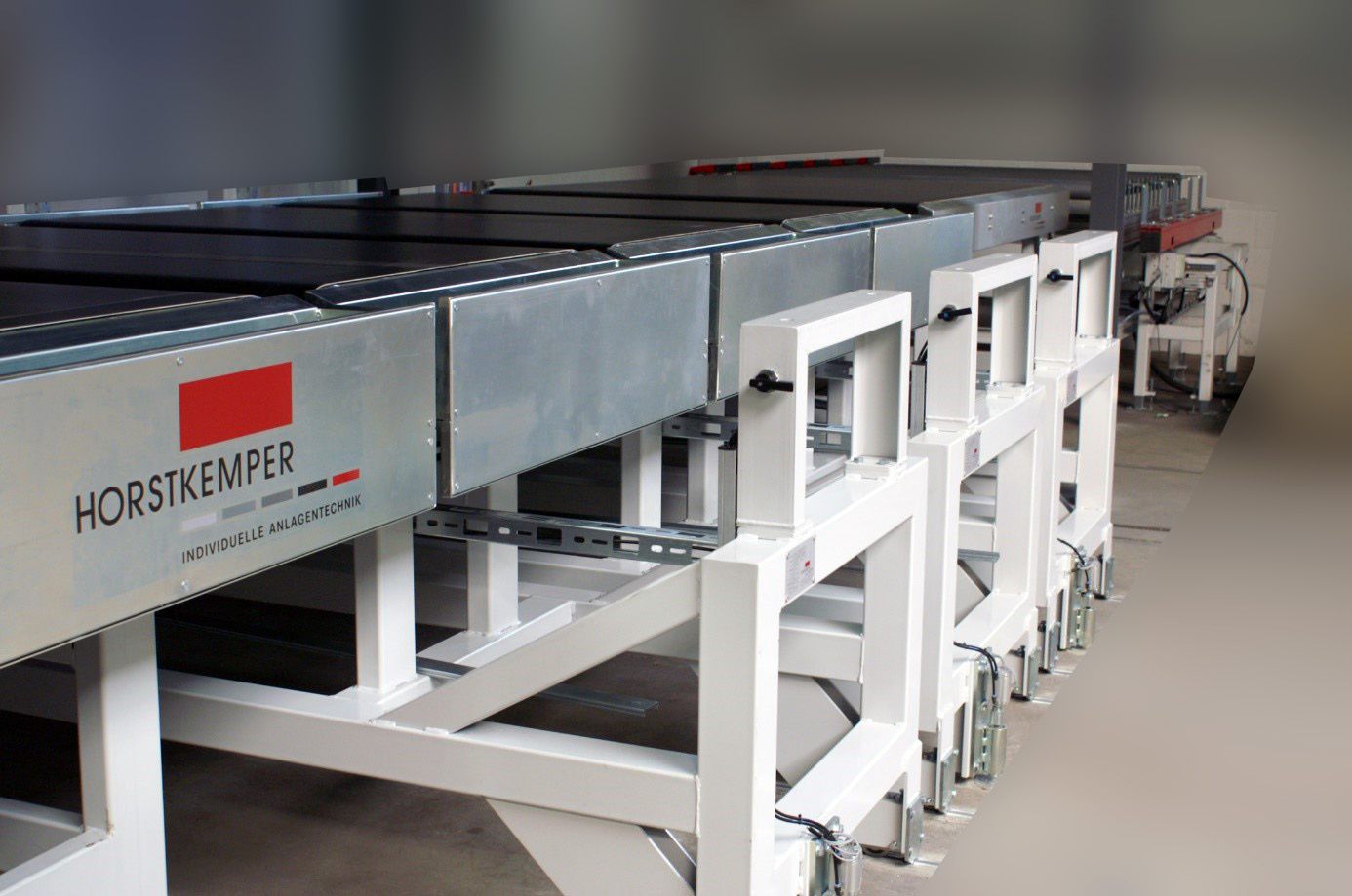
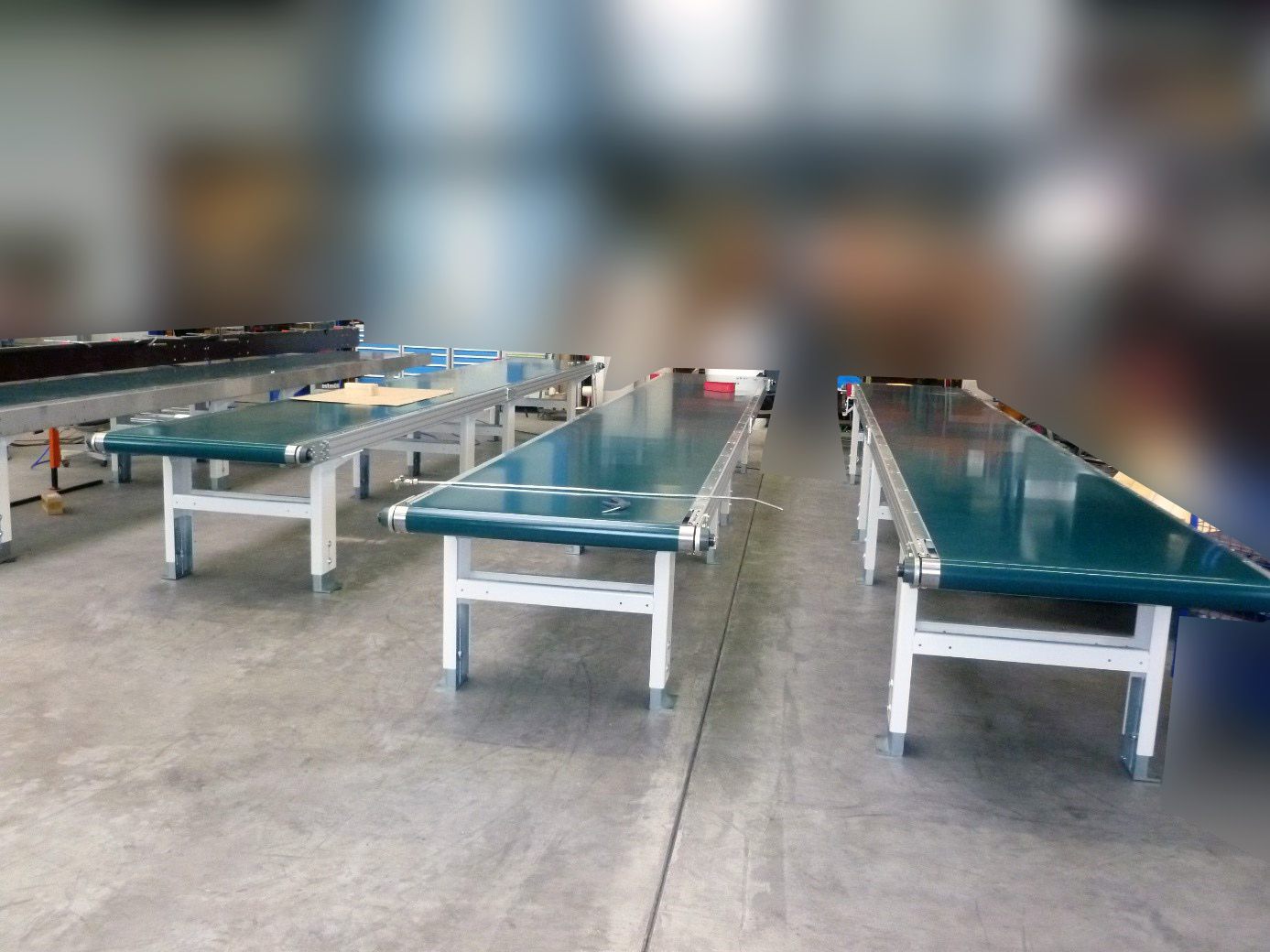
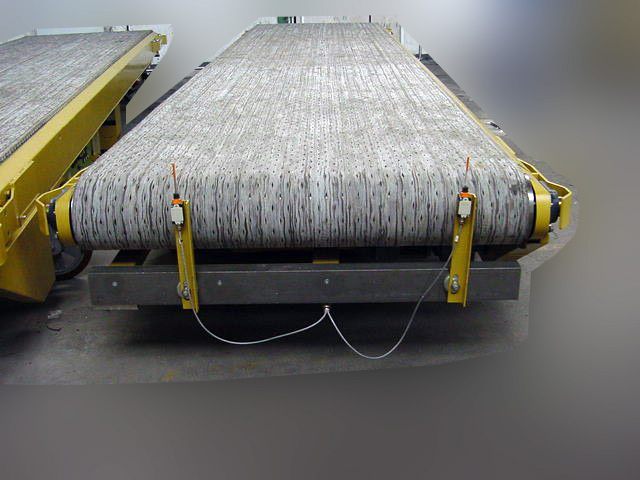
Our outfeed conveyors for press lines feature a design optimized for press operations and a robust construction. They are used in a wide variety of press lines and end-of-line systems. Dimensions, belt, and conveyor characteristics are tailored to the specific customer application. The conveyors are optionally available as line conveyors with fanner and height adjustment.
In automatic stacking systems in the end-of-line (EoL) area of press lines, workpieces often need to be distributed across two outfeed conveyors. To do this, the components are automatically placed on the tooling nest of a outfeed shuttle . The highly dynamic shuttle system transports the workpieces out of the outfeed area in throughput direction of the press and positions them with precise alignment via a rotary axis for the stacking robots . Accelerations of 12 m/s² are achieved on the X-axis. The shuttle systems are based on proven HORSTKEMPER assemblies. Tooling changes are performed automatically in parallel by a stacking robot and are an integral part of the end-of-line system.
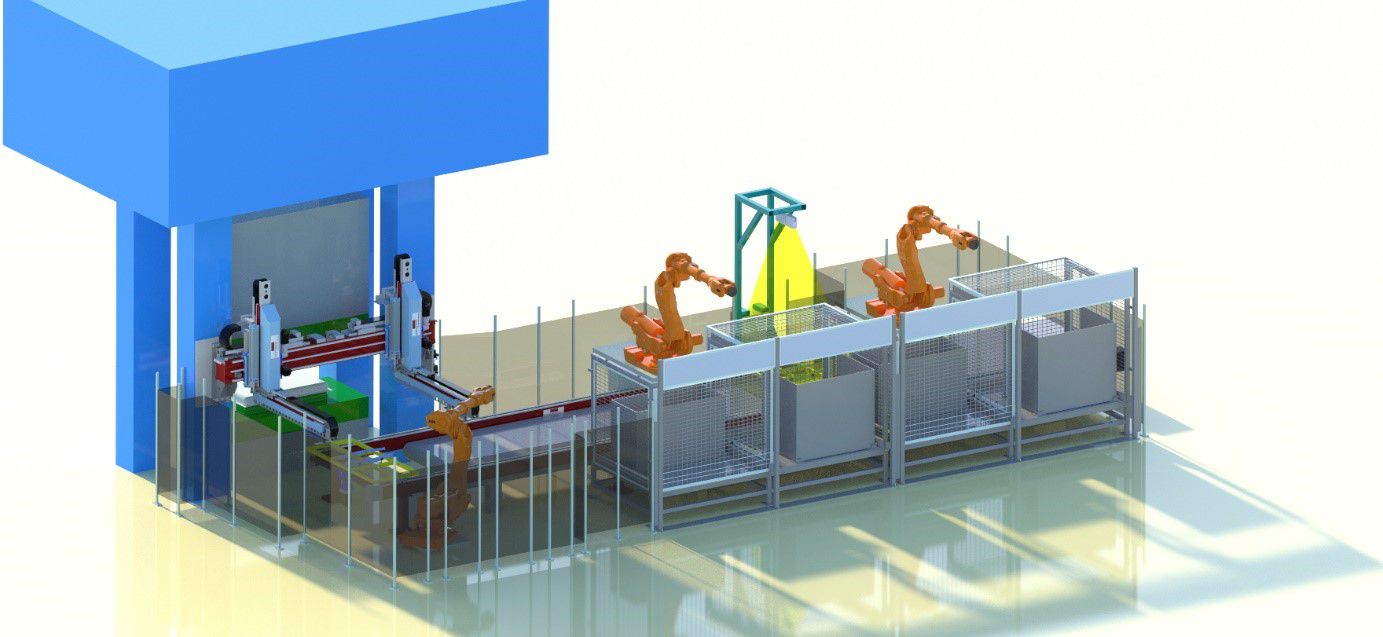
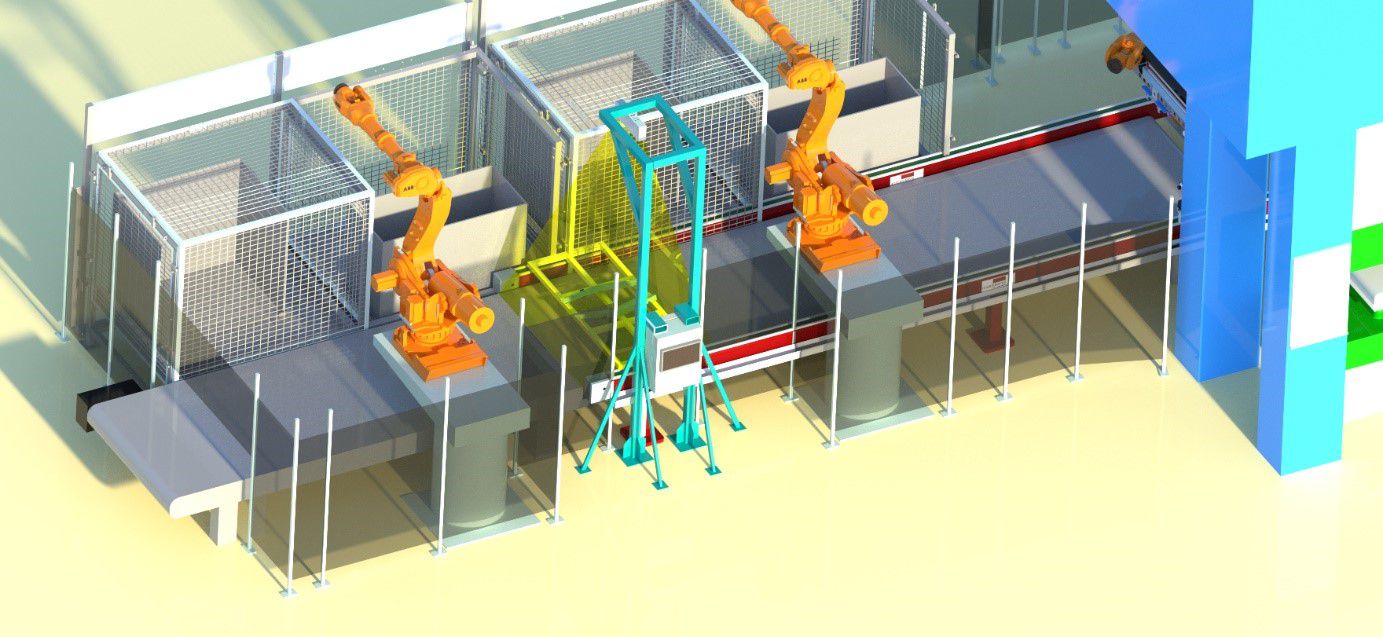
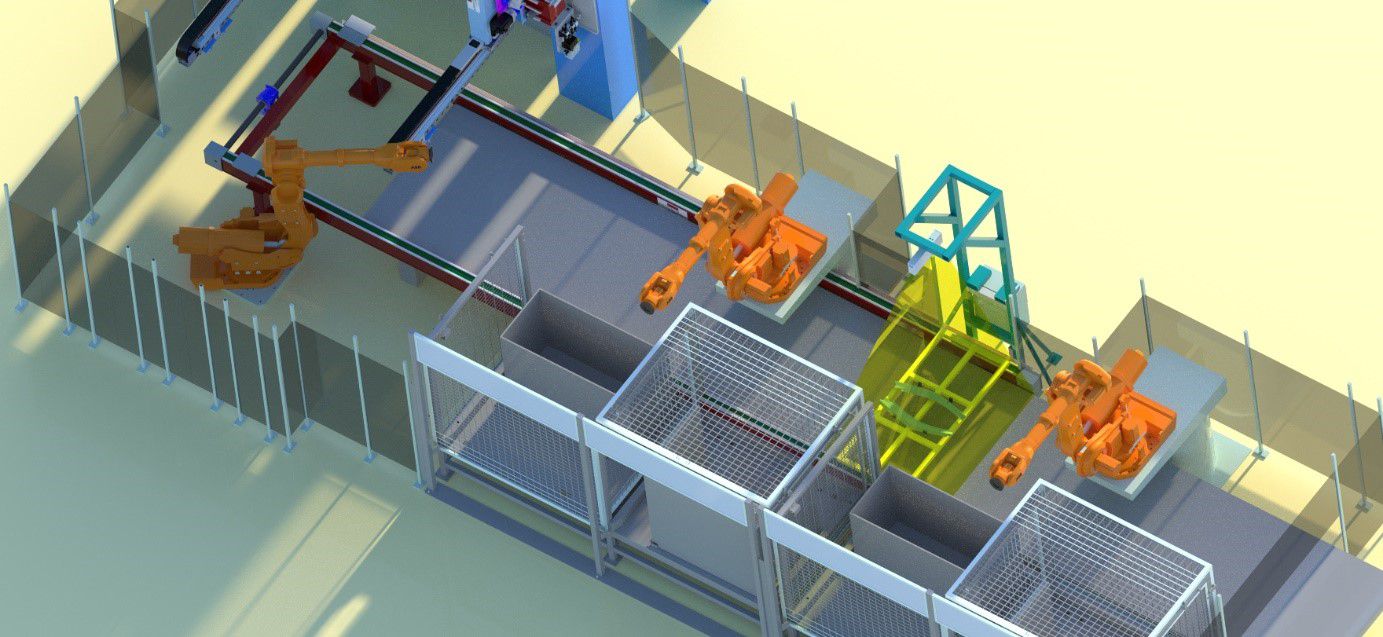
If parts are placed on an outfeed conveyor in the EoL area immediately after being unloaded from the press, the stacking robot requires precise position detection. To achieve this, we integrate camera and scanner systems from leading manufacturers. After detection, the stacking robot aligns the tooling and corrects the part orientation while moving toward the stacking container. The optical systems offer high flexibility and process reliability. In addition, HORSTKEMPER integrates optical systems for feature recognition into the EoL area. As part of a 100% inspection, all workpieces can thus be checked for missing features such as holes, etc.
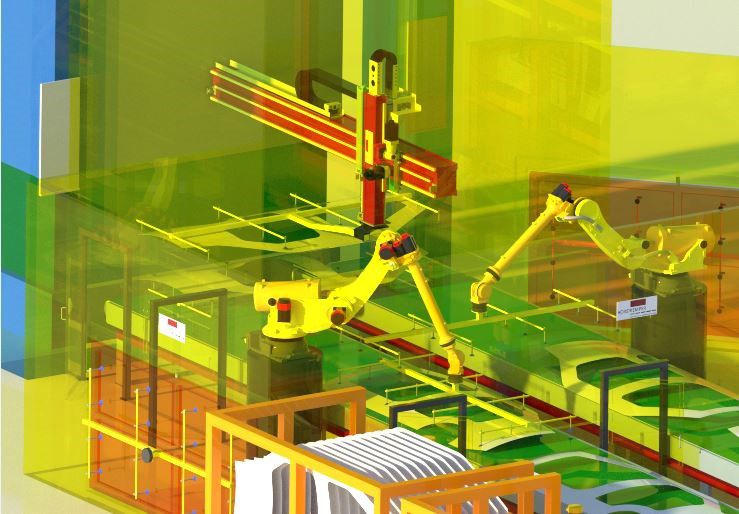
For automatic stacking in the EoL area, we use all common robot brands . The components are picked up precisely using tooling attached to the robots and placed into the containers. The precise positioning of the robots is crucial for the cycle time in order to fully utilize their reach and performance.
In addition to the robot bases, the scope of services also includes application-specific equipment such as tooling couplings, vacuum generators, and automatic tooling change doors, as well as complete motion simulations prior to system implementation.
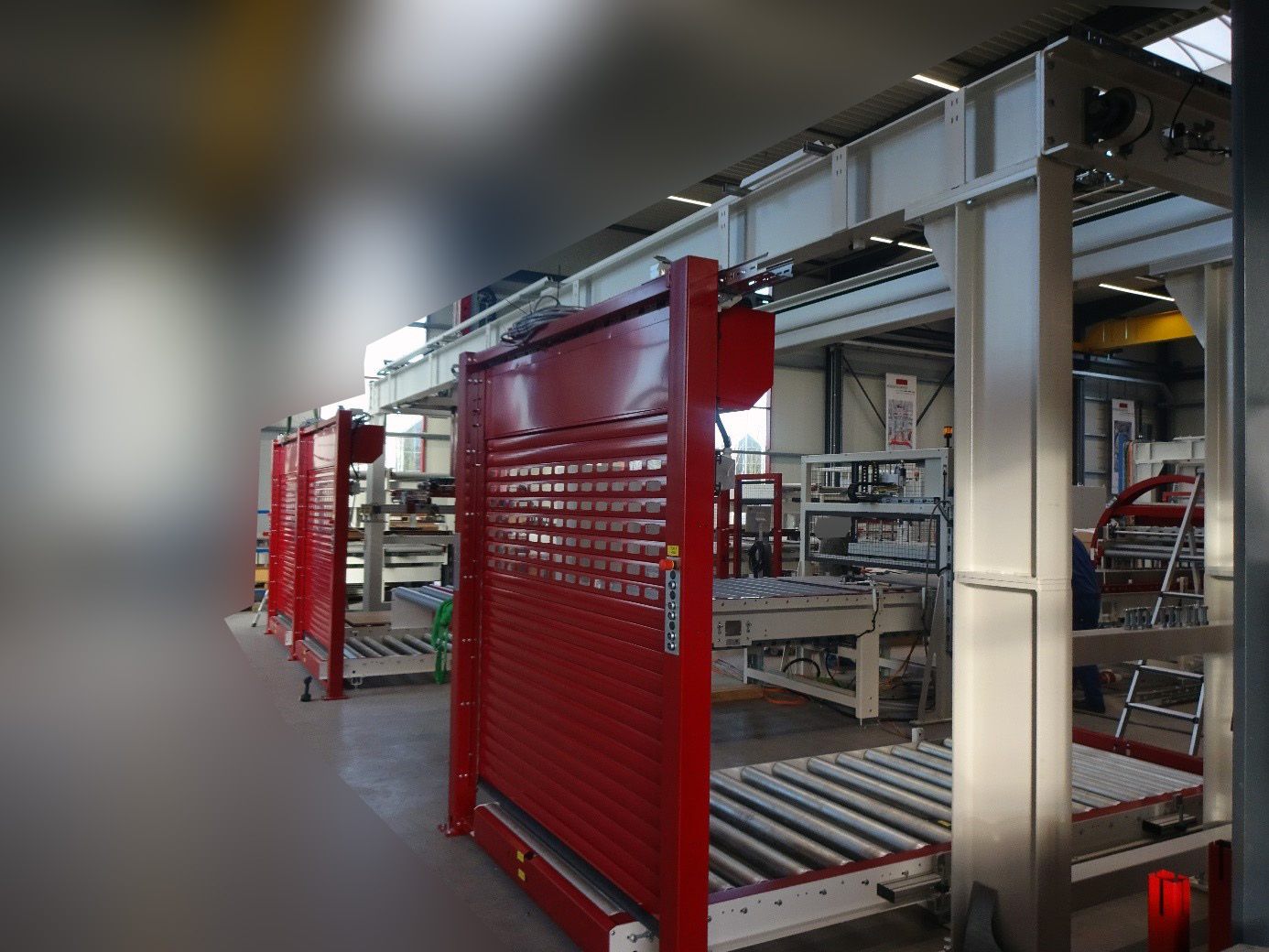
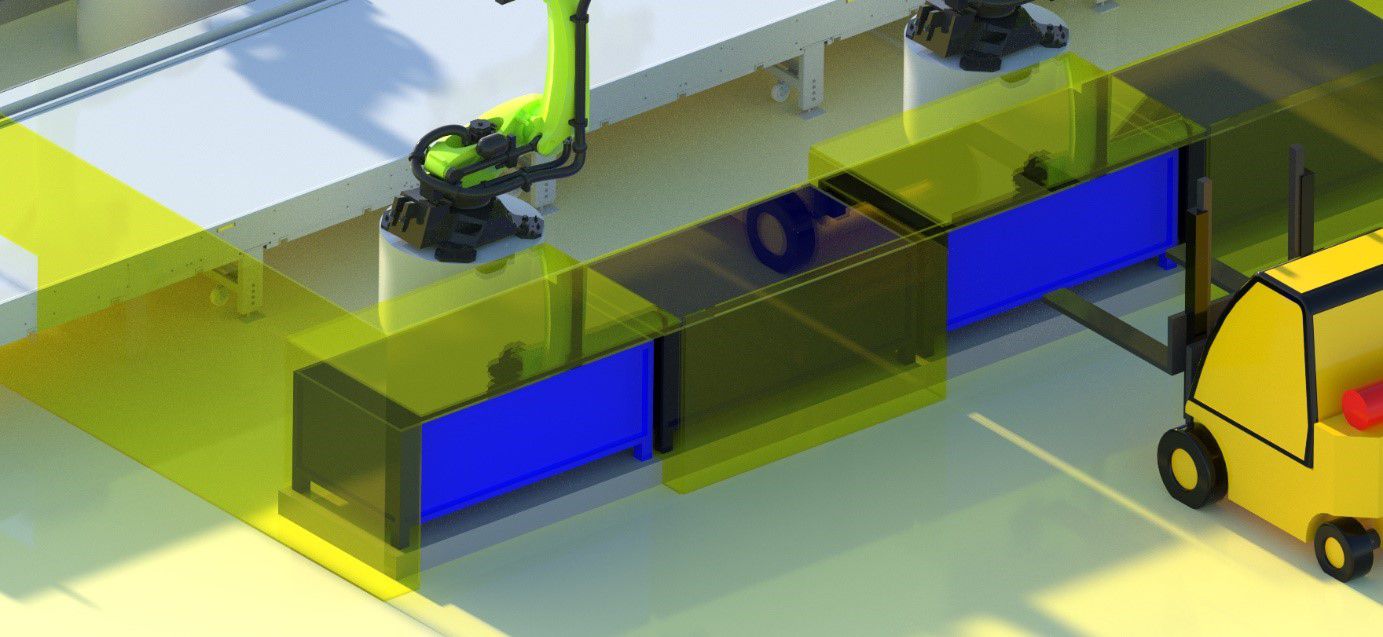
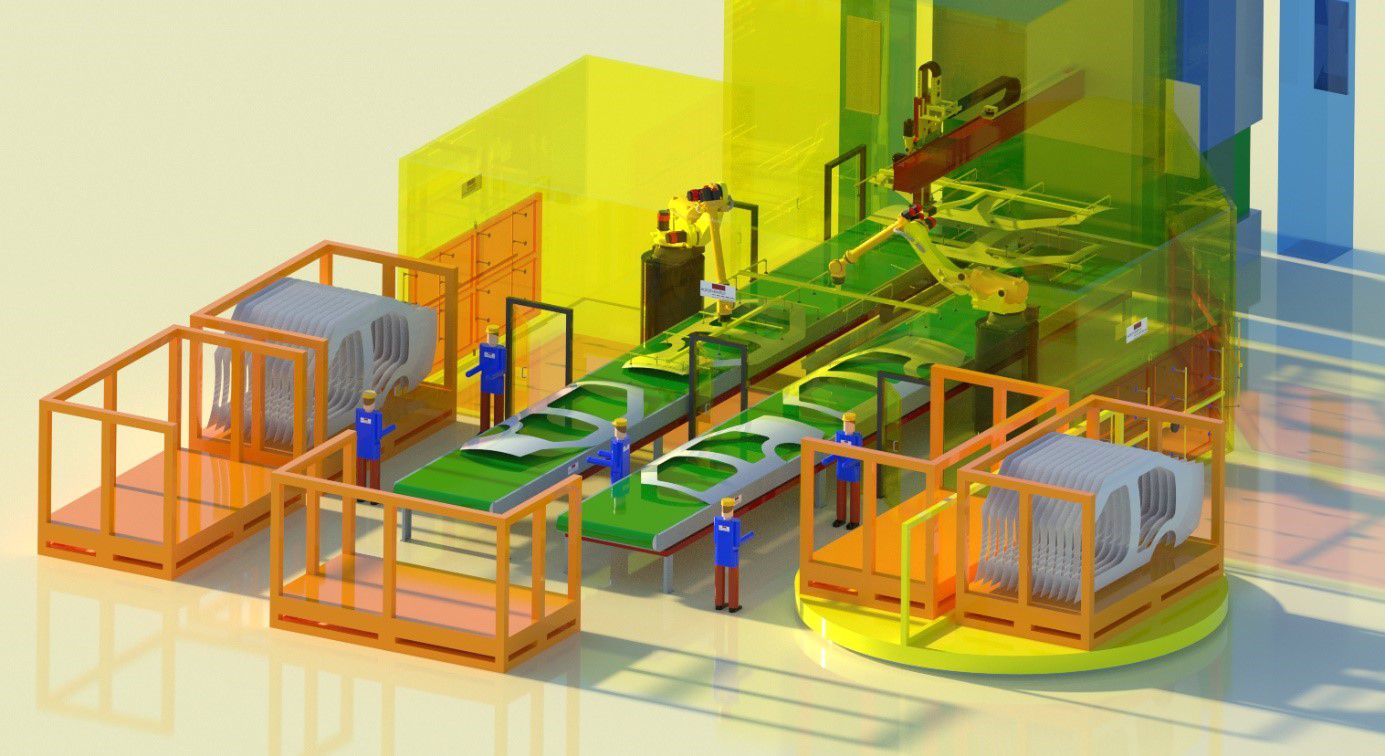
The container stations constitute the final part of an EoL system. Press-formed parts are placed in containers, mesh boxes, or stacking racks and stacked for transport, e.g., to the body-in-white shop.
In fully automated systems, the container stations are equipped with pre-centering features to ensure repeatable placement. In addition, sophisticated safety concepts ensure safe automated stacking and container changes.