

In hot forming and press hardening, heated blanks made of high-strength steels are formed into lightweight, crash-resistant automotive components.
Hot Forming | Press Hardening
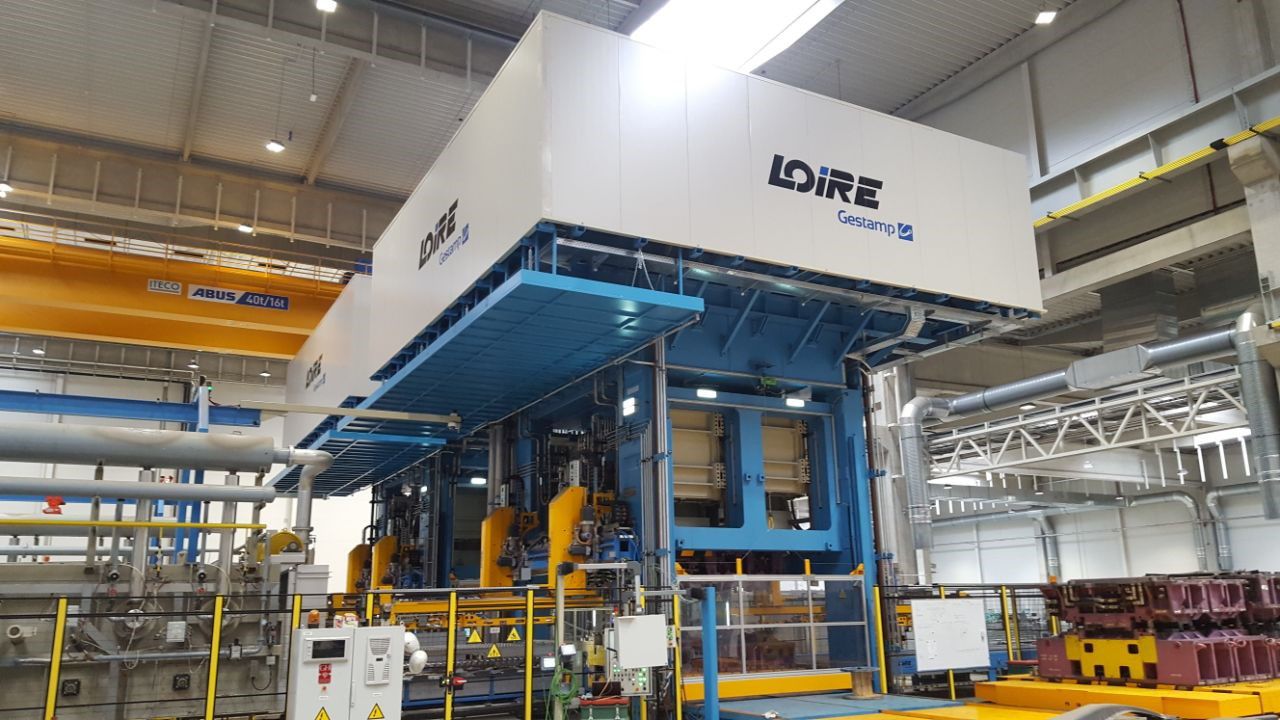
HORSTKEMPER provides precise automation solutions for this purpose—ranging from robust centering stations after the furnace to highly dynamic loading and unloading systems.
Modular feeder and transfer systems ensure short cycle times, optimal synchronization between the press and the automation system, and maximum process reliability. The portfolio also includes destackers and automatic stacking systems for the end-of-line (EoL) area.
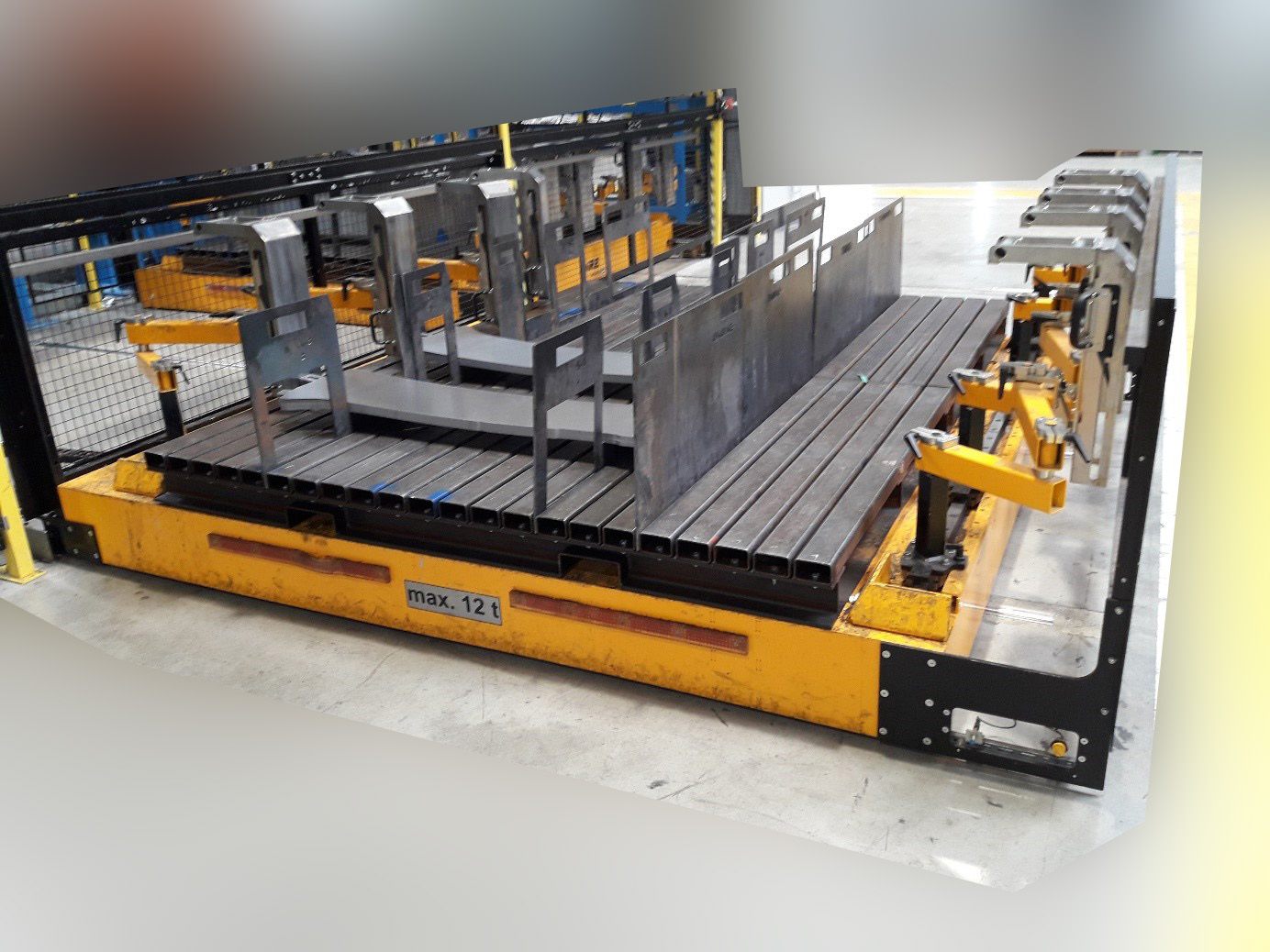
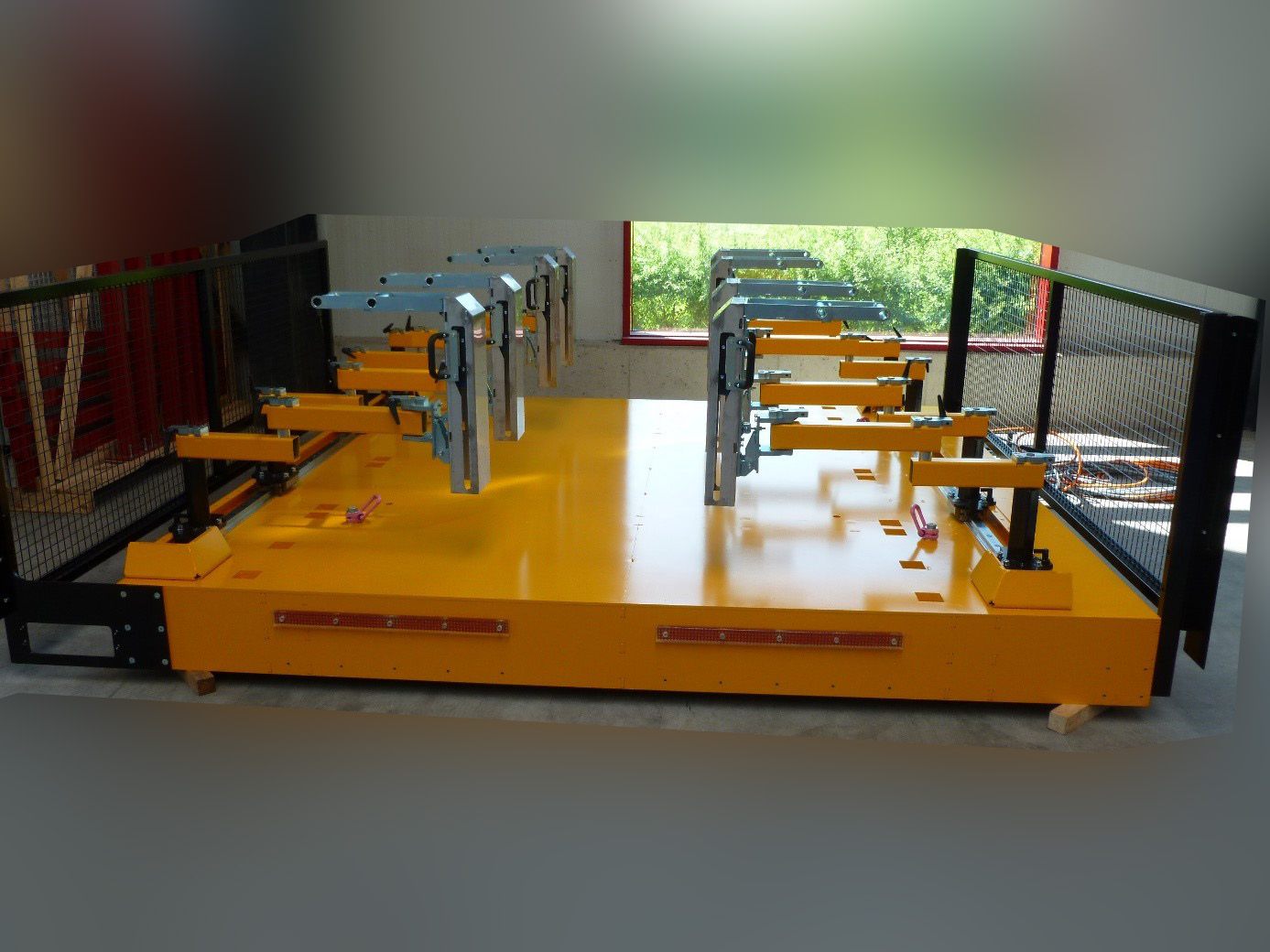
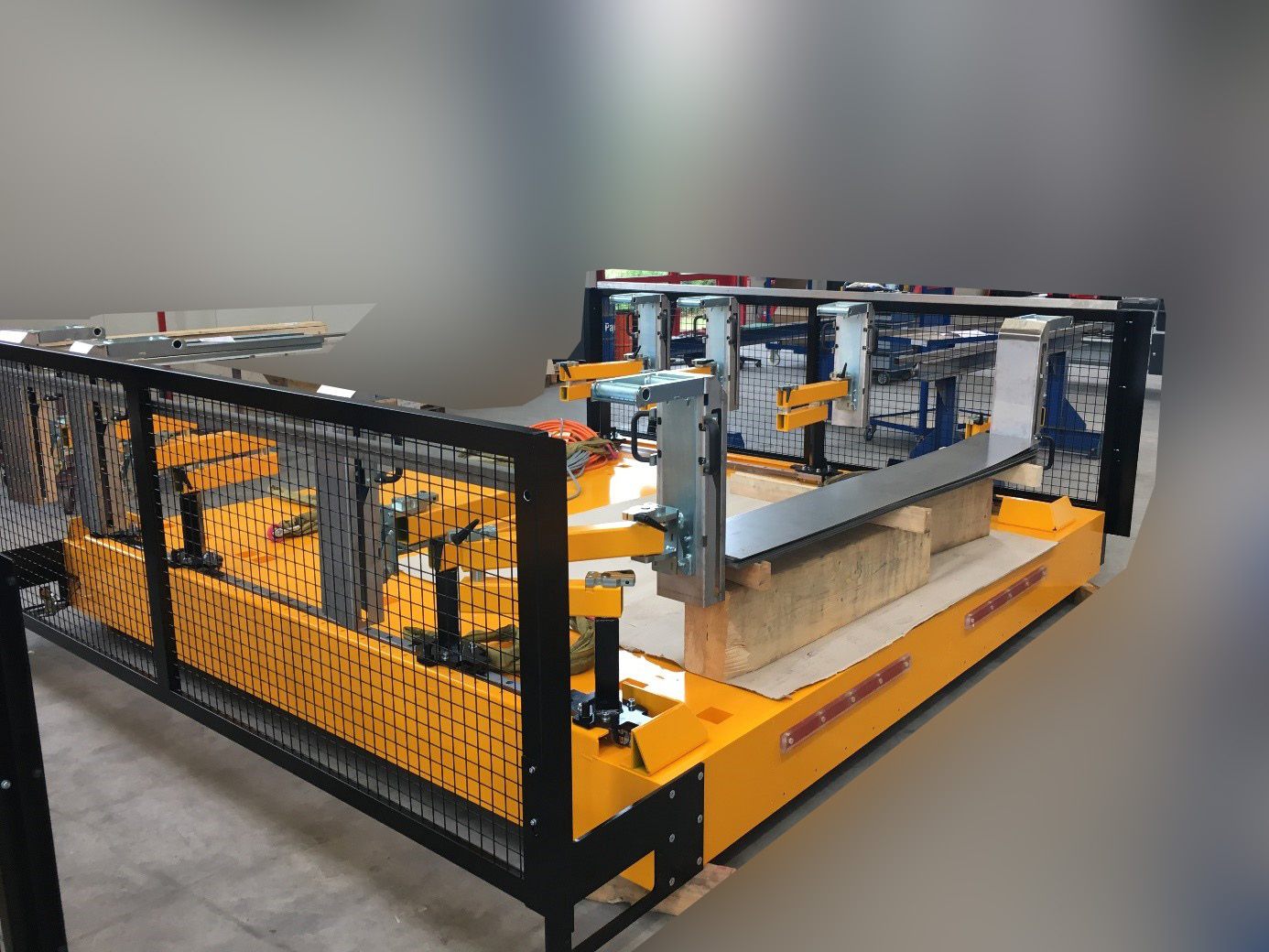
Blank carts are usually the first component of an automated blank feeding system. Stacks of blanks are placed on the cart using a forklift, gantry-crane, or automated guided vehicle and fed to the destacker. The load capacity and dimensions can be customized. Using two independent carts enables uninterrupted production.
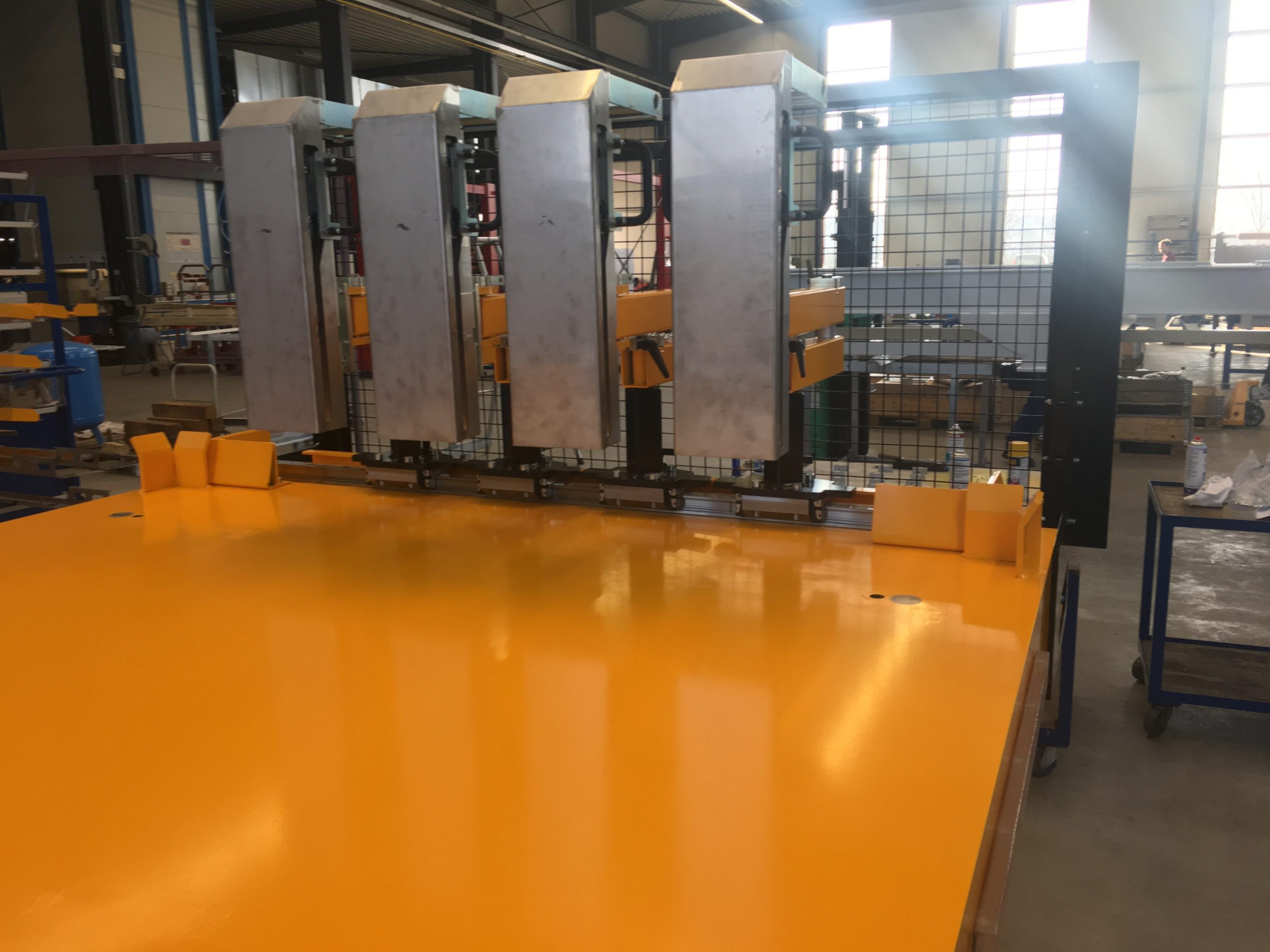
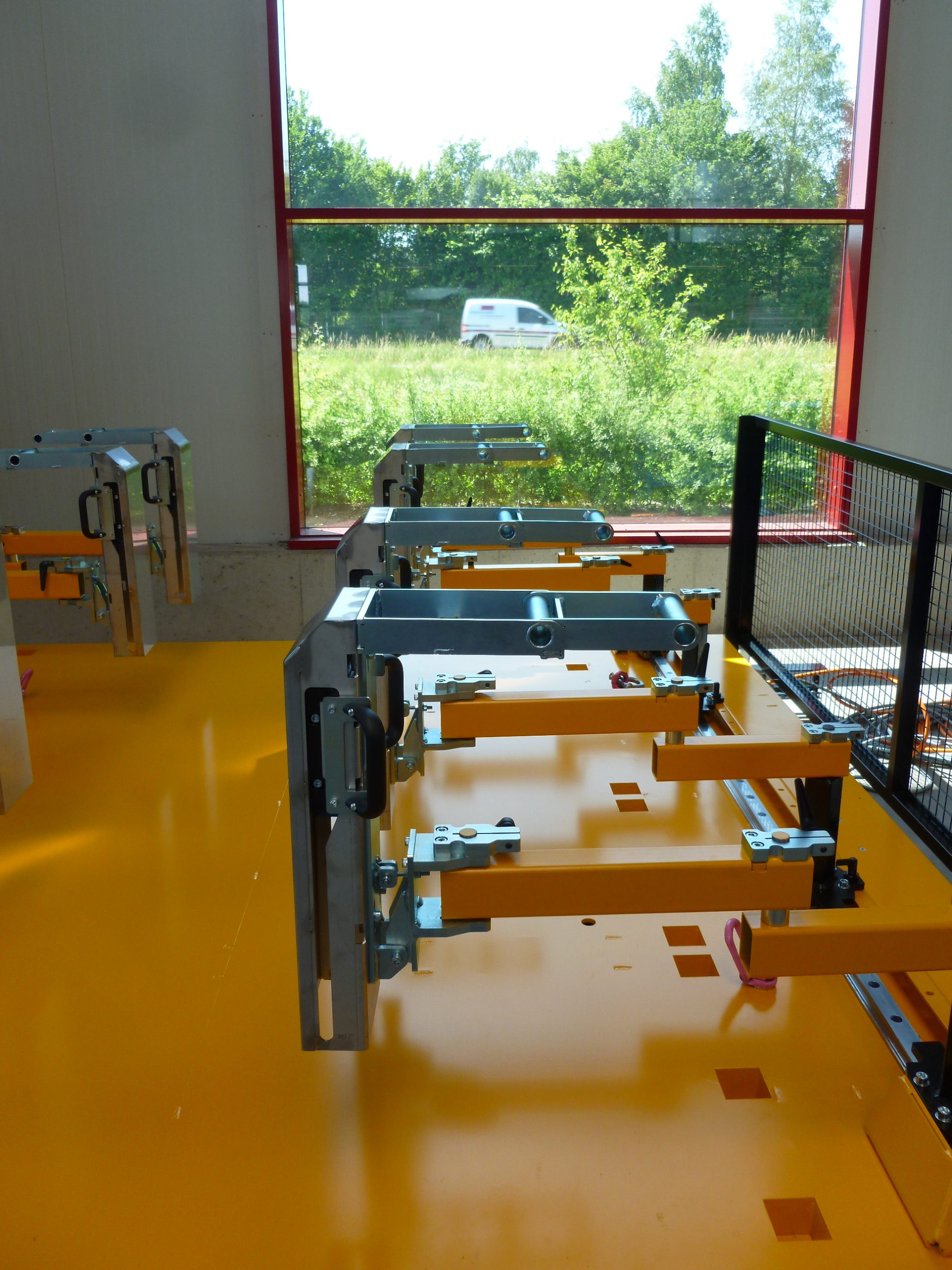
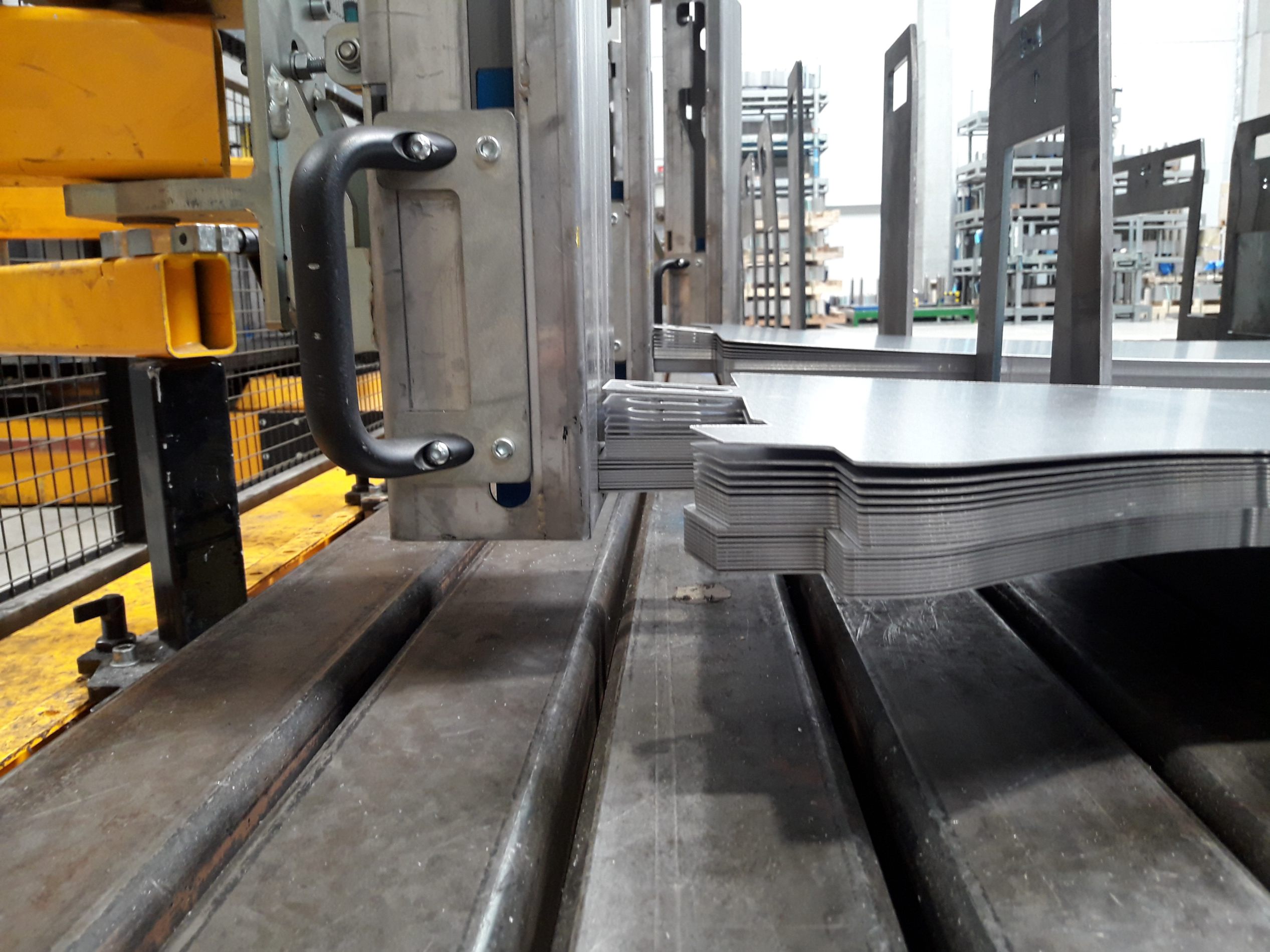
The separation of the blanks is usually performed using spreader magnets to accelerate the destacking process. The blanks are fanned out by individually adjusting the magnets to their geometry. Specially selected materials and an optimized arrangement of the spreading magnets ensure optimal separation results. The number of spreaders and the degree of automation can be customized. In addition, our spreading system portfolio offers options for spreading non-ferritic materials.
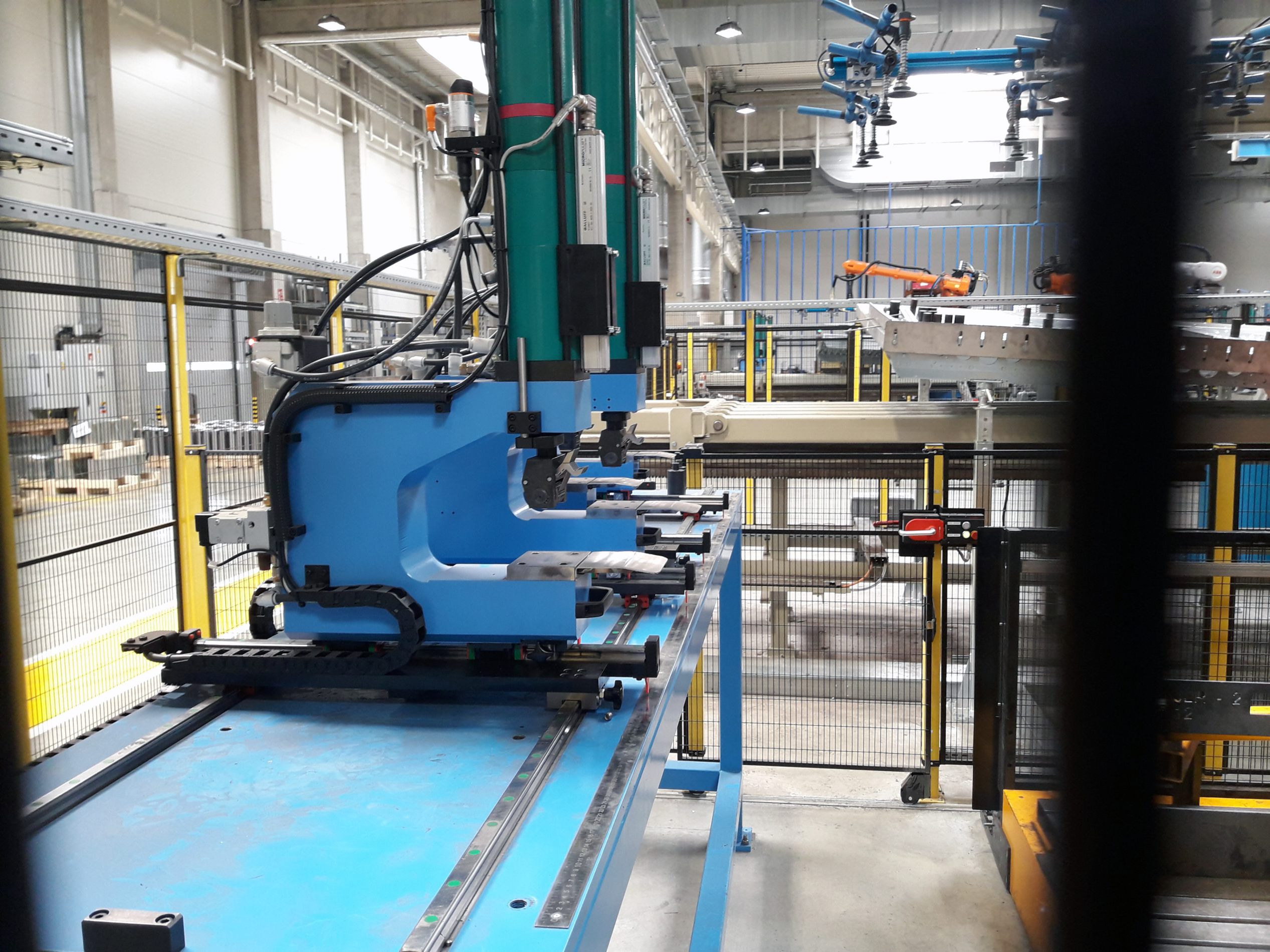
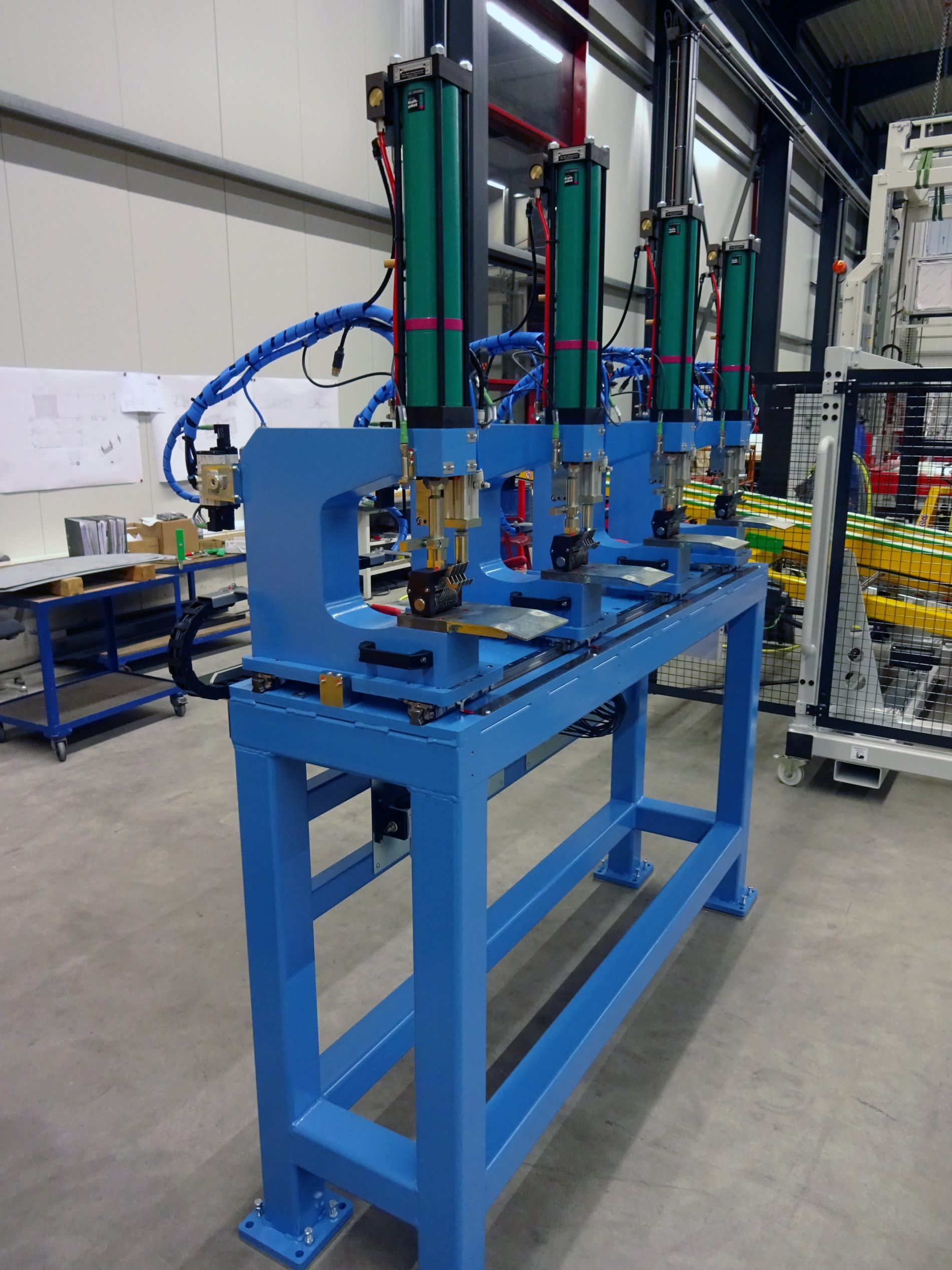
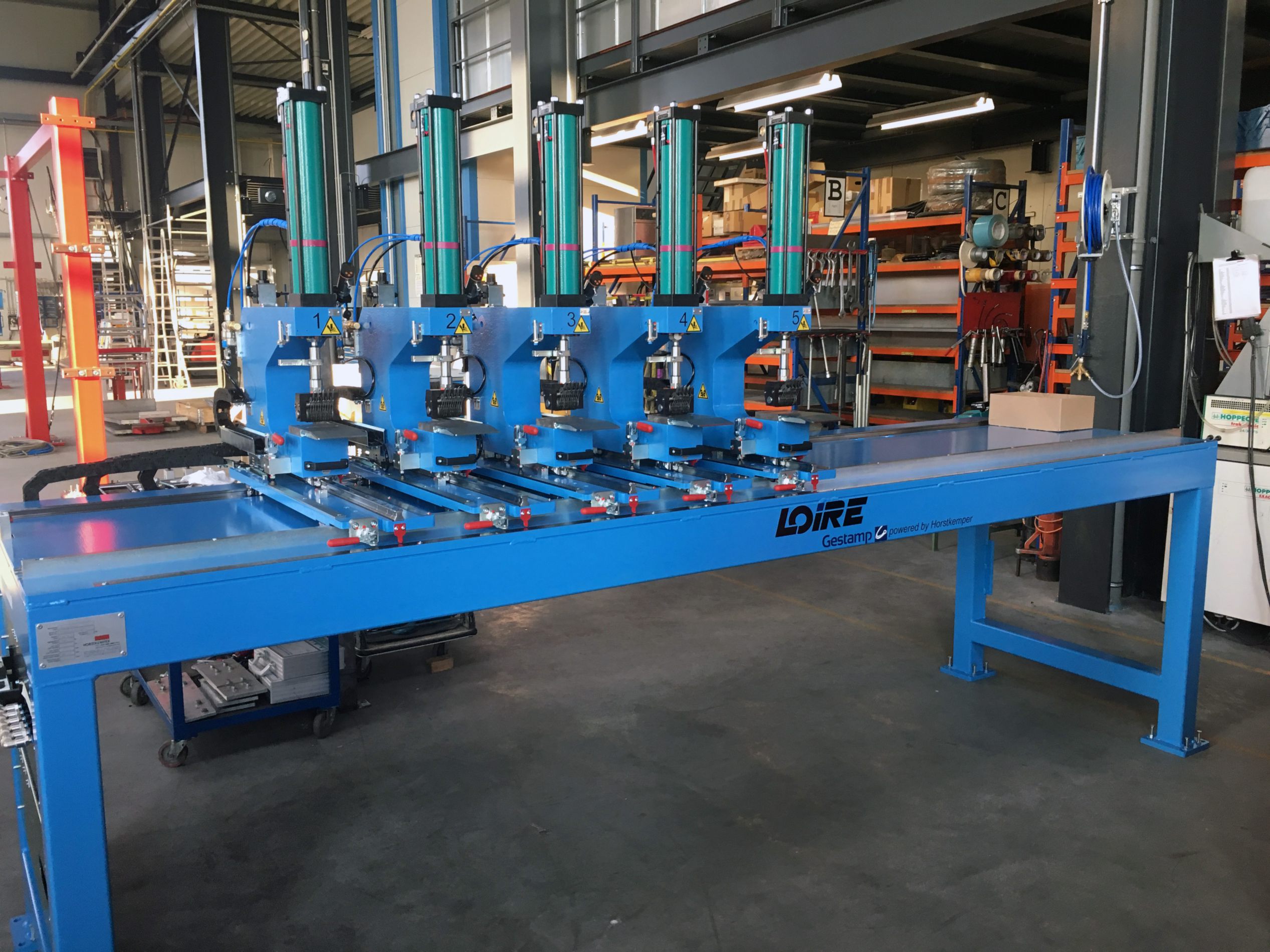
Press-hardened components are usually safety-critical, so the blanks must be marked and labeled with the lot number during destacking. HORSTKEMPER supplies low-noise marking stations for this purpose, which emboss number sequences and special characters while simultaneously performing a double-blank check to ensure that only single blanks are loaded into the press.
The stations can be configured individually. The number of marking units (2–8) and the setup process for changing product types can be adjusted from manual to fully automated.
After destacking, the blanks must be fed into the marking station and the furnace inlet in the correct orientation. For this purpose, many hot forming systems are equipped with a pre-centering station, which can consist of anything from simple centering templates to systems that can be set up manually or automatically.
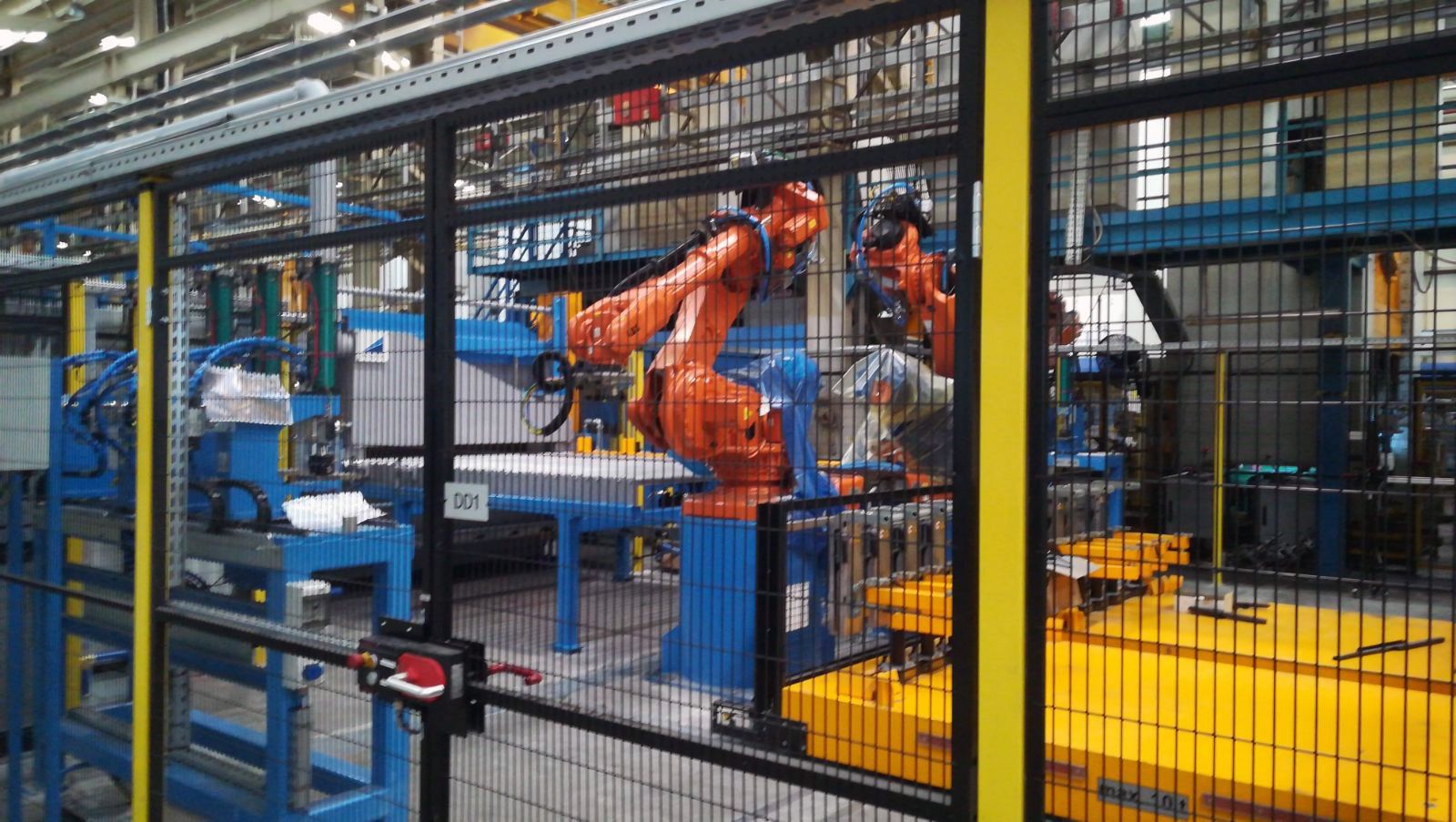
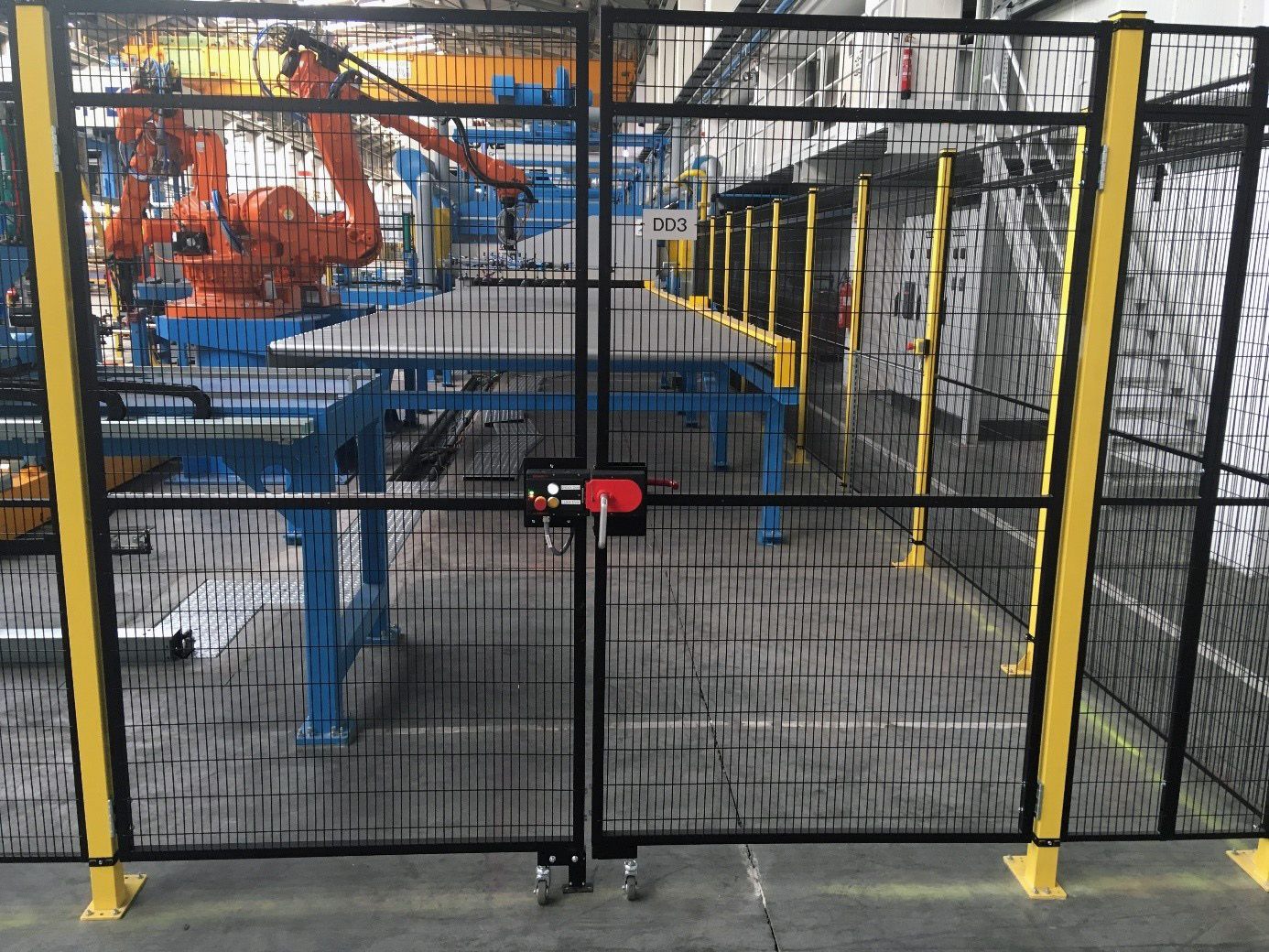
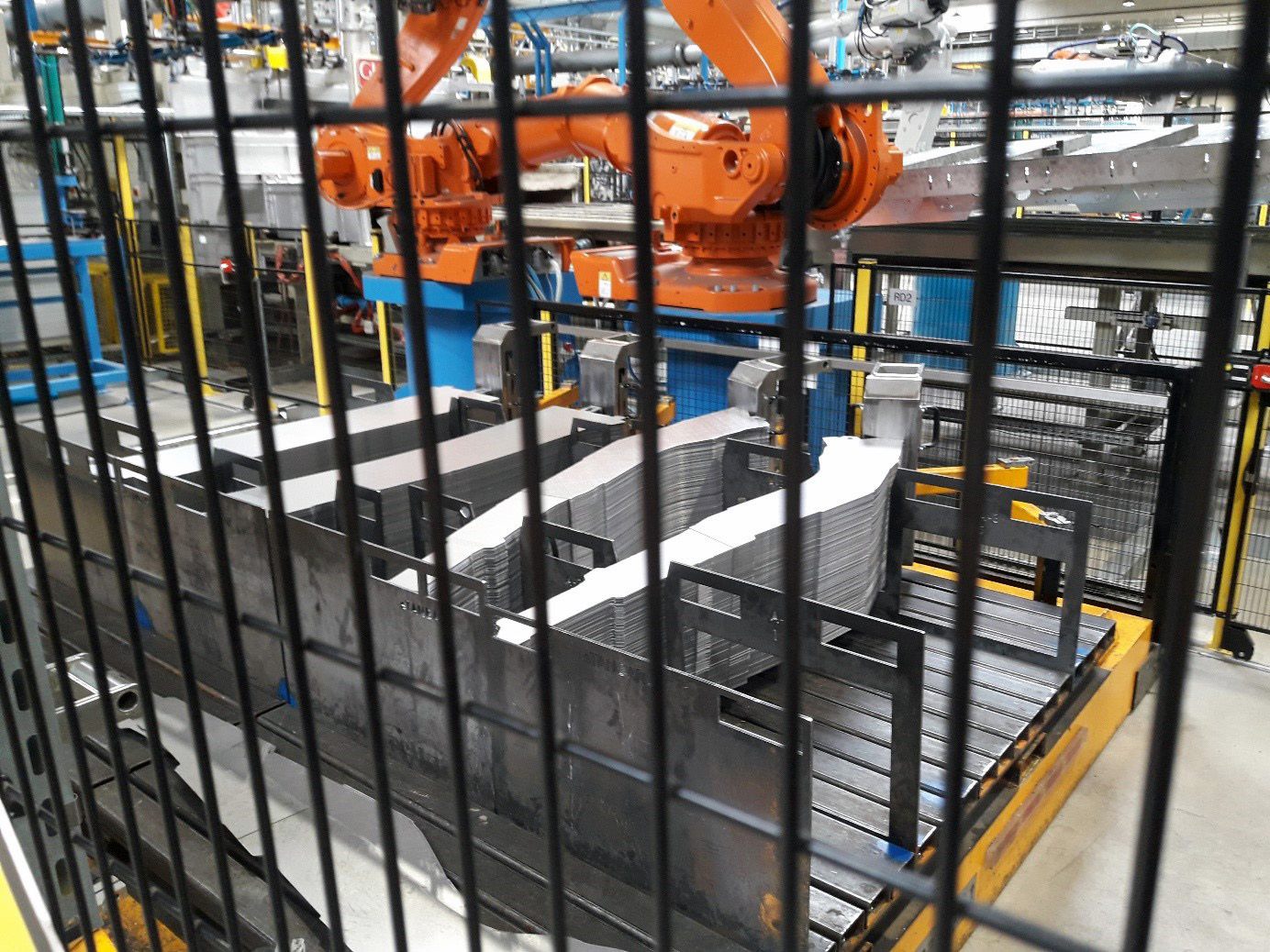
For the destacking process in hot forming/press hardening, destacking robots or destacking feeders are typically used. Six-axis robots are used as standard, while larger reach is often required in multi-part production. Here, our highly dynamic destacking feeder systems—with up to four axes of motion—enable freely configurable stroke lengths, long reach distances, high feed velocities, and the orientation of the blanks.
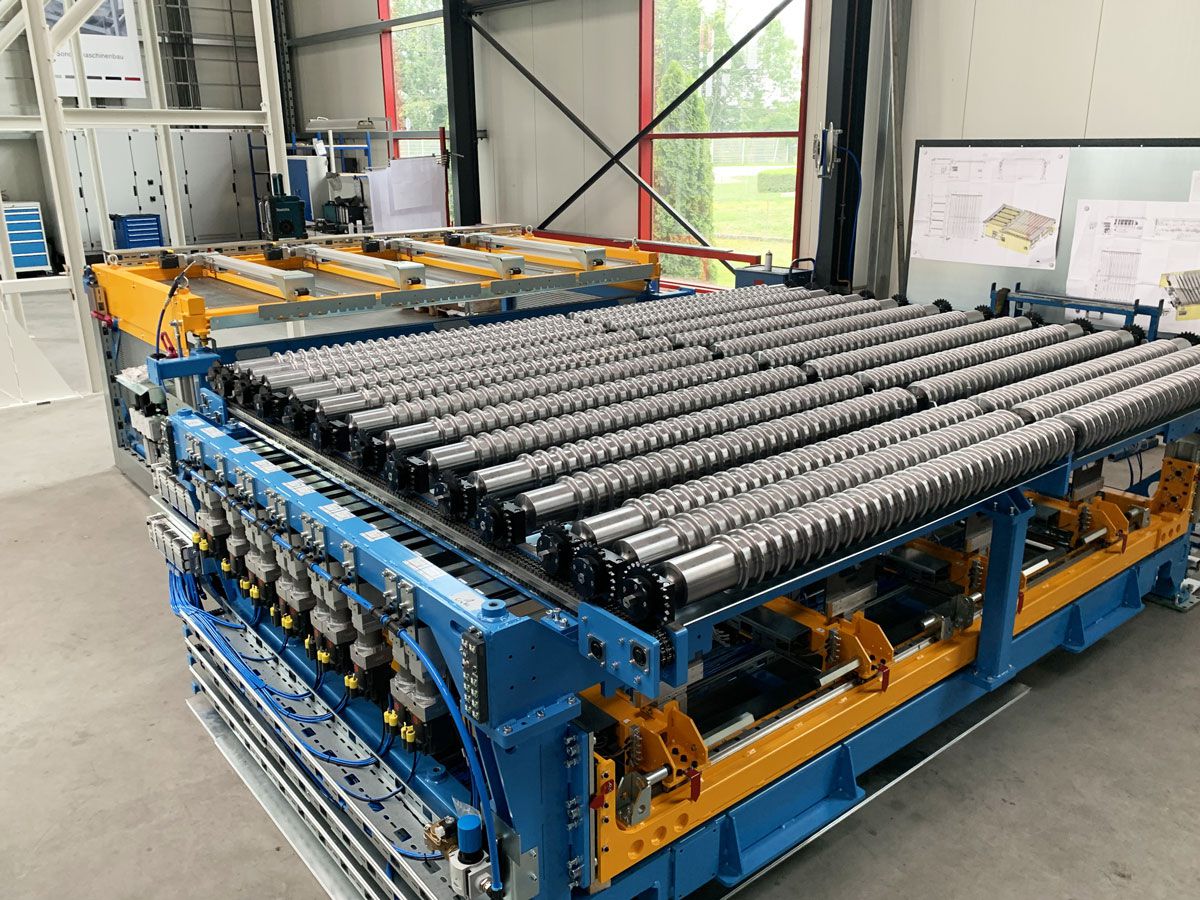
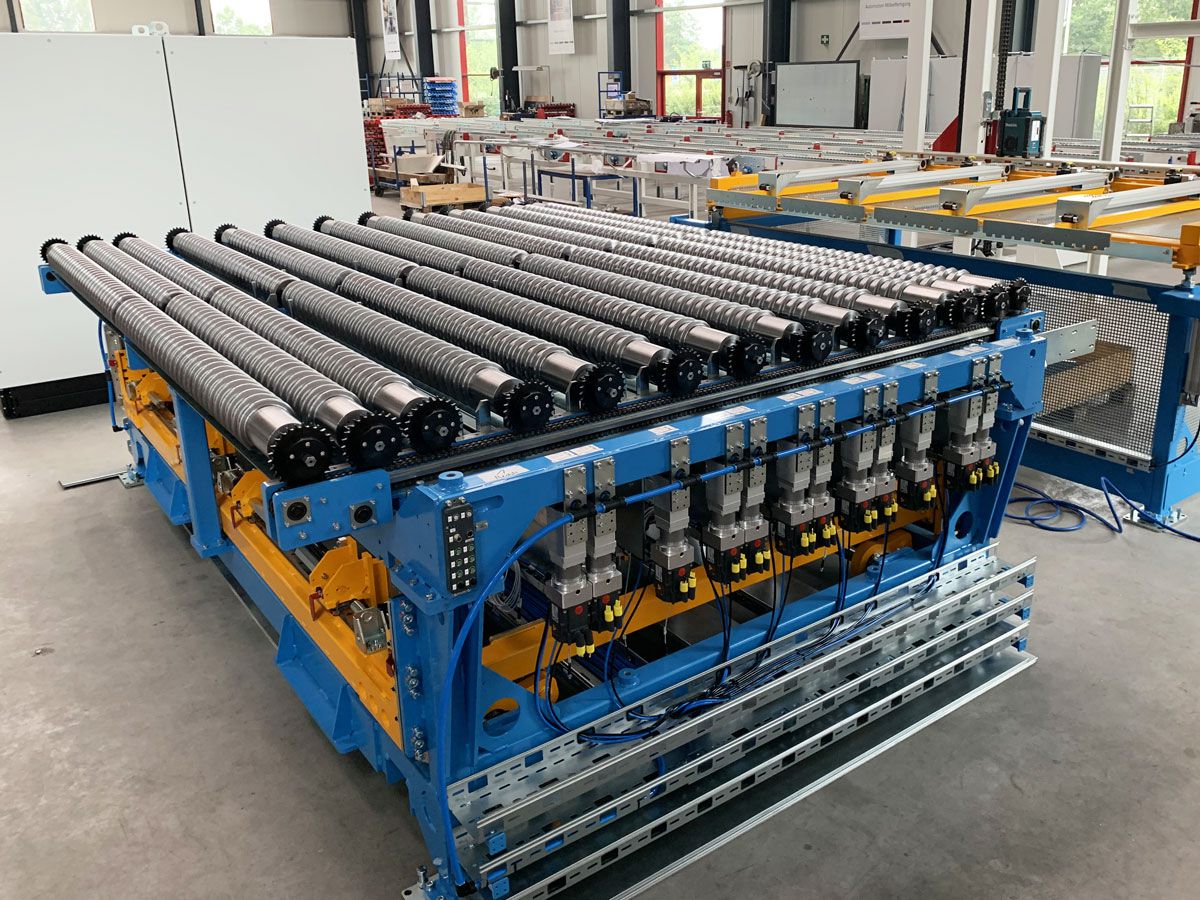
The centering station is the central element of the mechanization of hot forming/press hardening lines. Located directly behind the furnace, it positions the 950°C hot blanks precisely so that they can be fed quickly and accurately into the press die. HORSTKEMPER supplies centering stations for all common furnace types, including roller hearth and lift-step conveyor furnaces, as well as combined lifting and centering systems for double-deck furnaces. A high degree of automation and multi-part production of blanks arranged side by side or one behind the other are standard features.
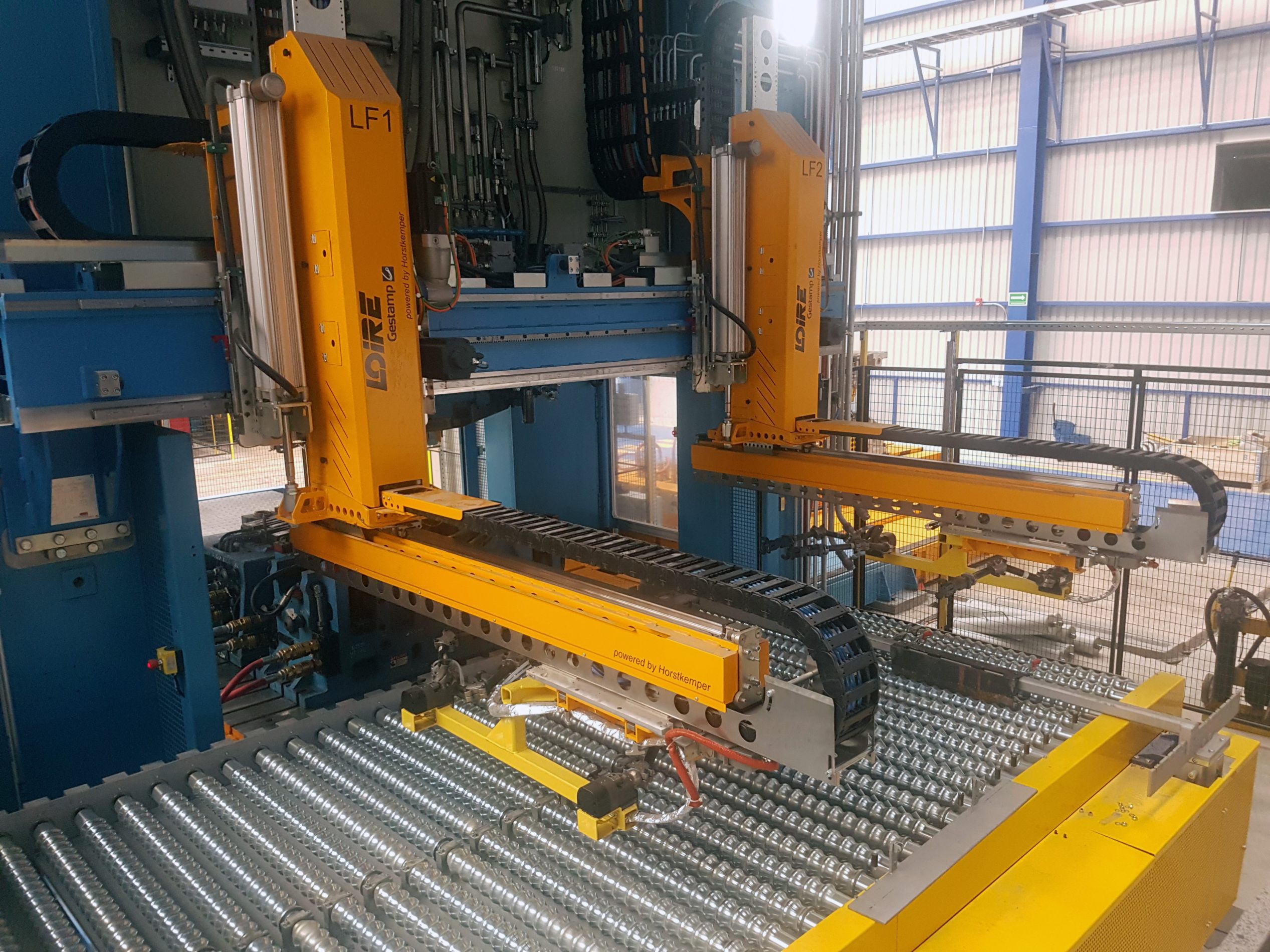
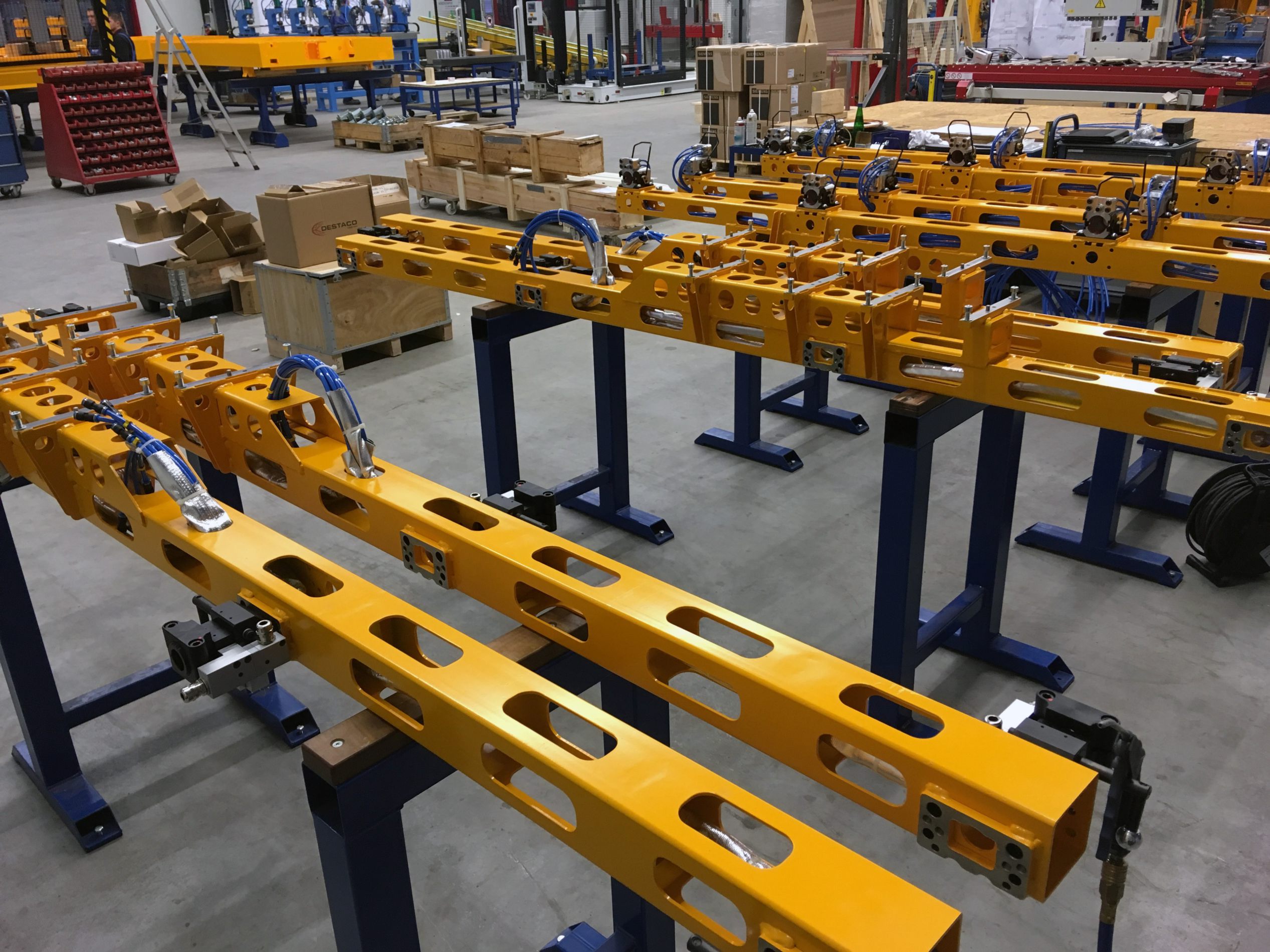
For the press-hardening process, rapid loading and unloading of the press is crucial to ensure that the blanks do not cool down during transport out of the furnace. We offer transfer systems with special drive kinematics, 12–14 freely programmable servo axes, and very high feeding velocities for the shortest possible cycle times.
The product portfolio for these processes includes four sizes with different load capacities and stroke lengths. The scope of delivery also includes complete tooling beams, including gripper peripherals.
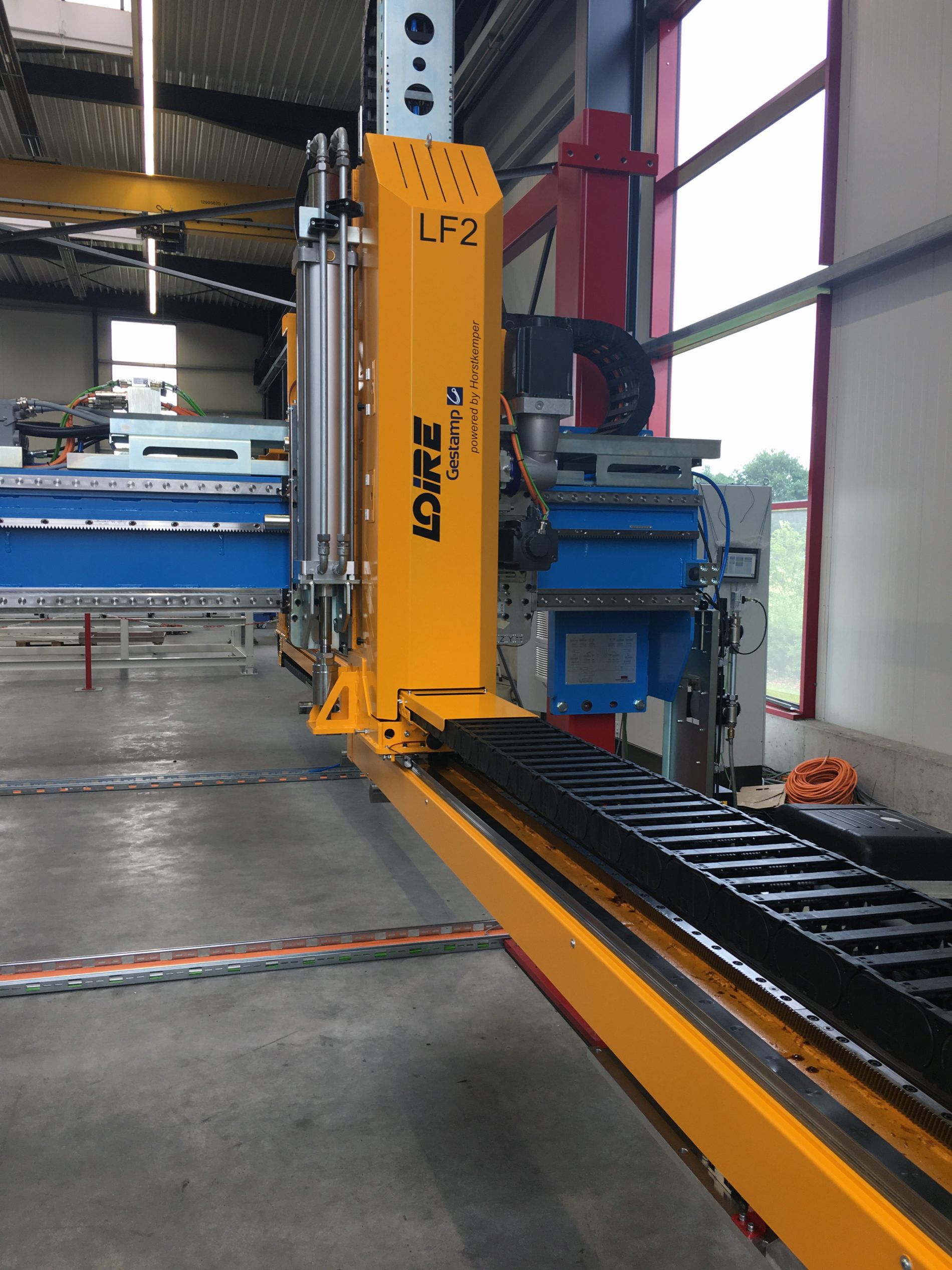
In hot forming and press hardening, the loading and unloading of the press—depending on the die technology and forming process—is often carried out using linear-axis-based feeder systems. The goal is to keep the cycle time for workpiece changeover within the press as short as possible.
HORSTKEMPER feeder systems are designed for this process; they are robust and dynamic. Each system typically uses three to four freely programmable servo axes. Load capacities of up to 240 kg at maximum feeding velocities are standard.
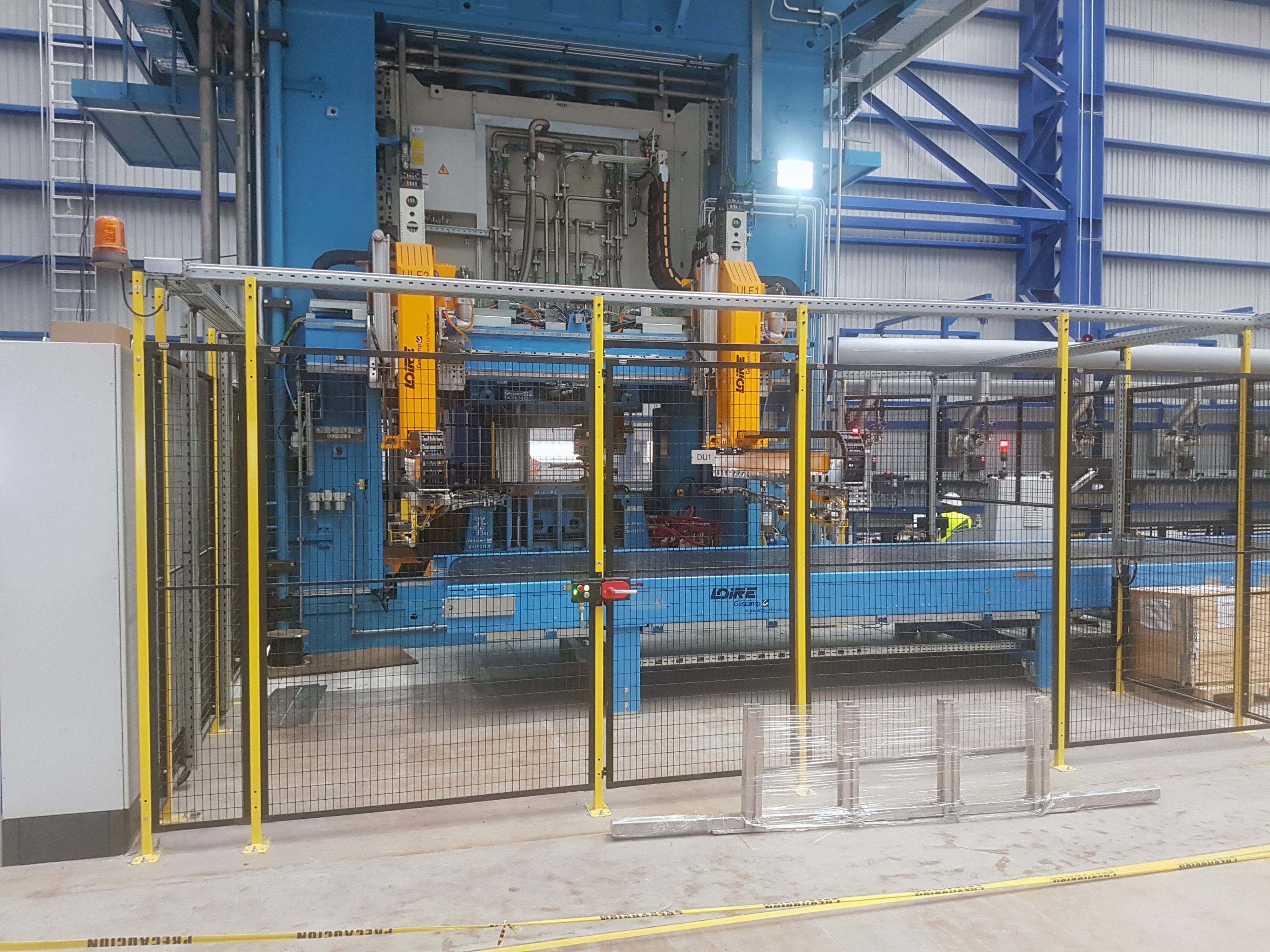
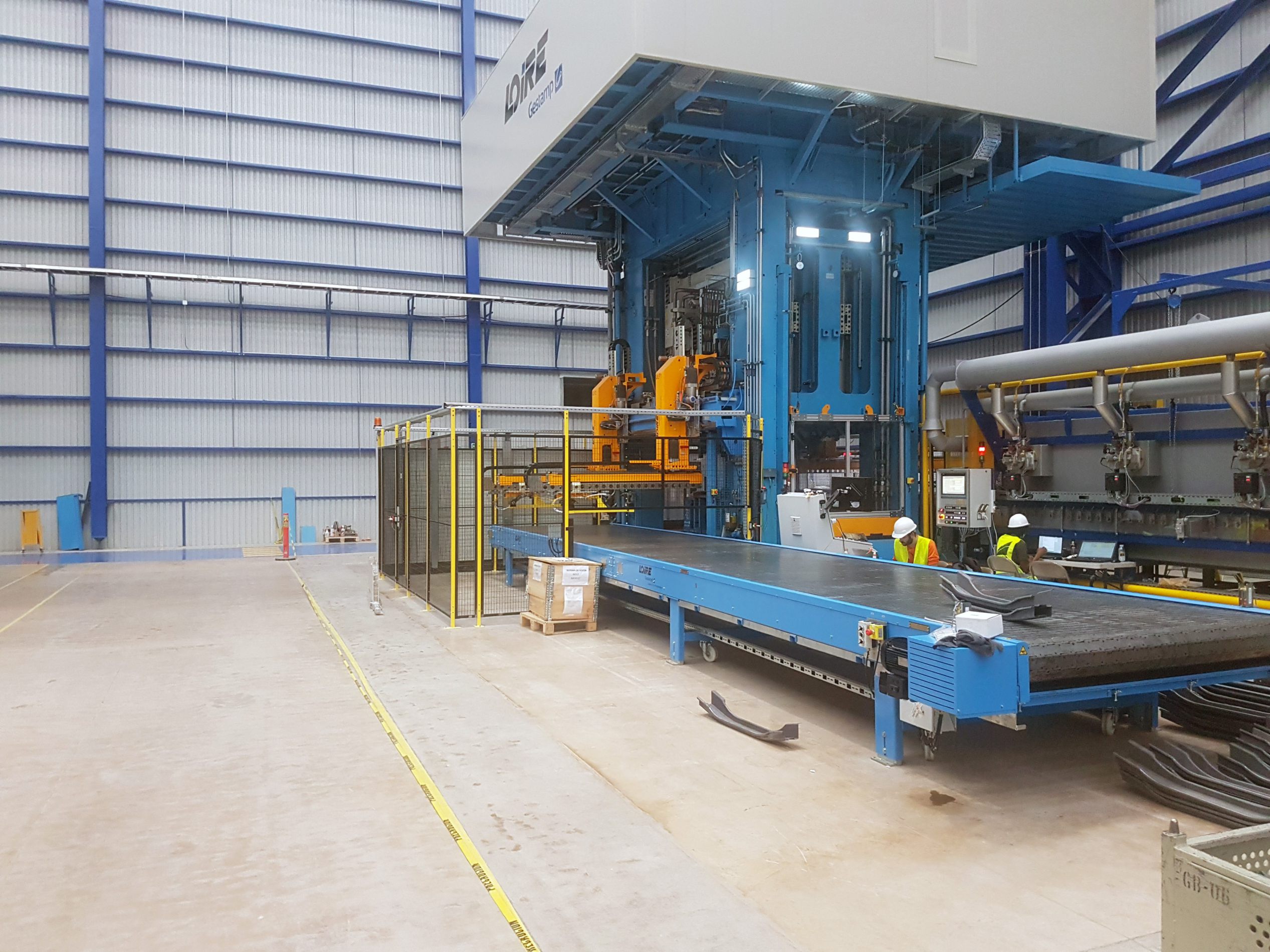
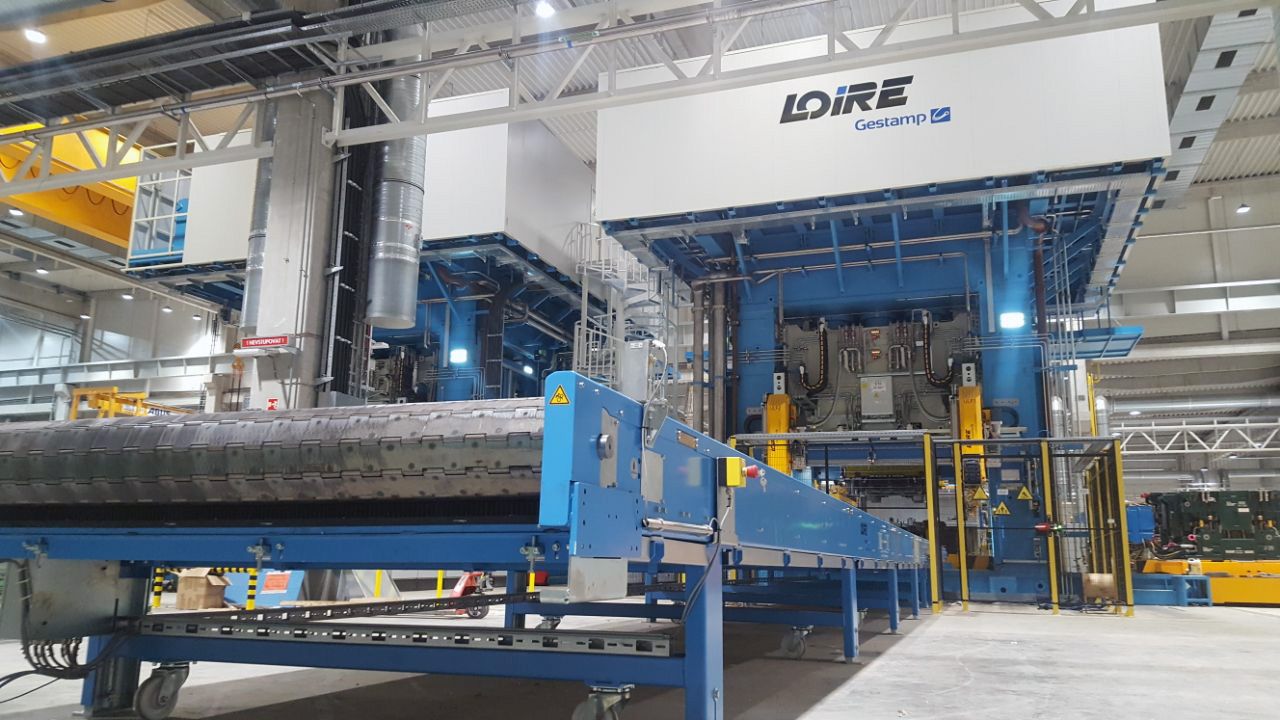
One or more outfeed conveyors are used in the EoL section of a hot forming line. We supply modular hinged belt conveyors that are resistant to abrasion and residual heat of up to approximately 200°C. The conveyors are available in lengths of 8–28 m and widths of 1.2–2.3 m. Robust construction and a design optimized for press operations ensure high availability in demanding environments.
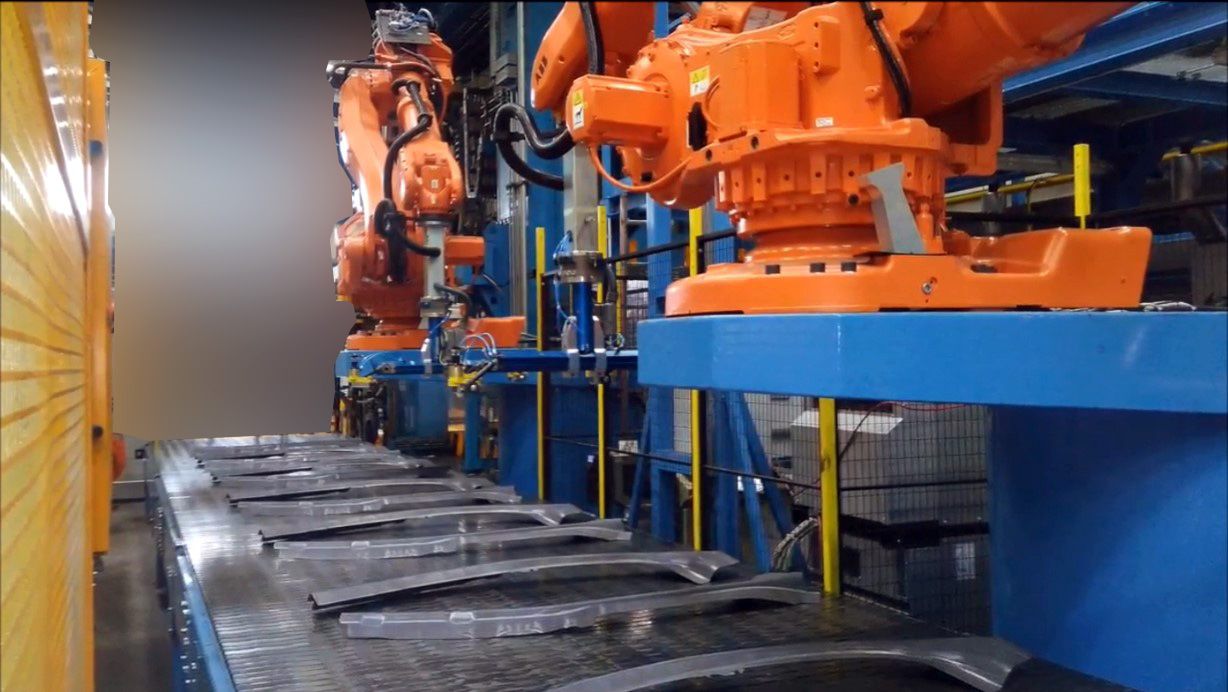
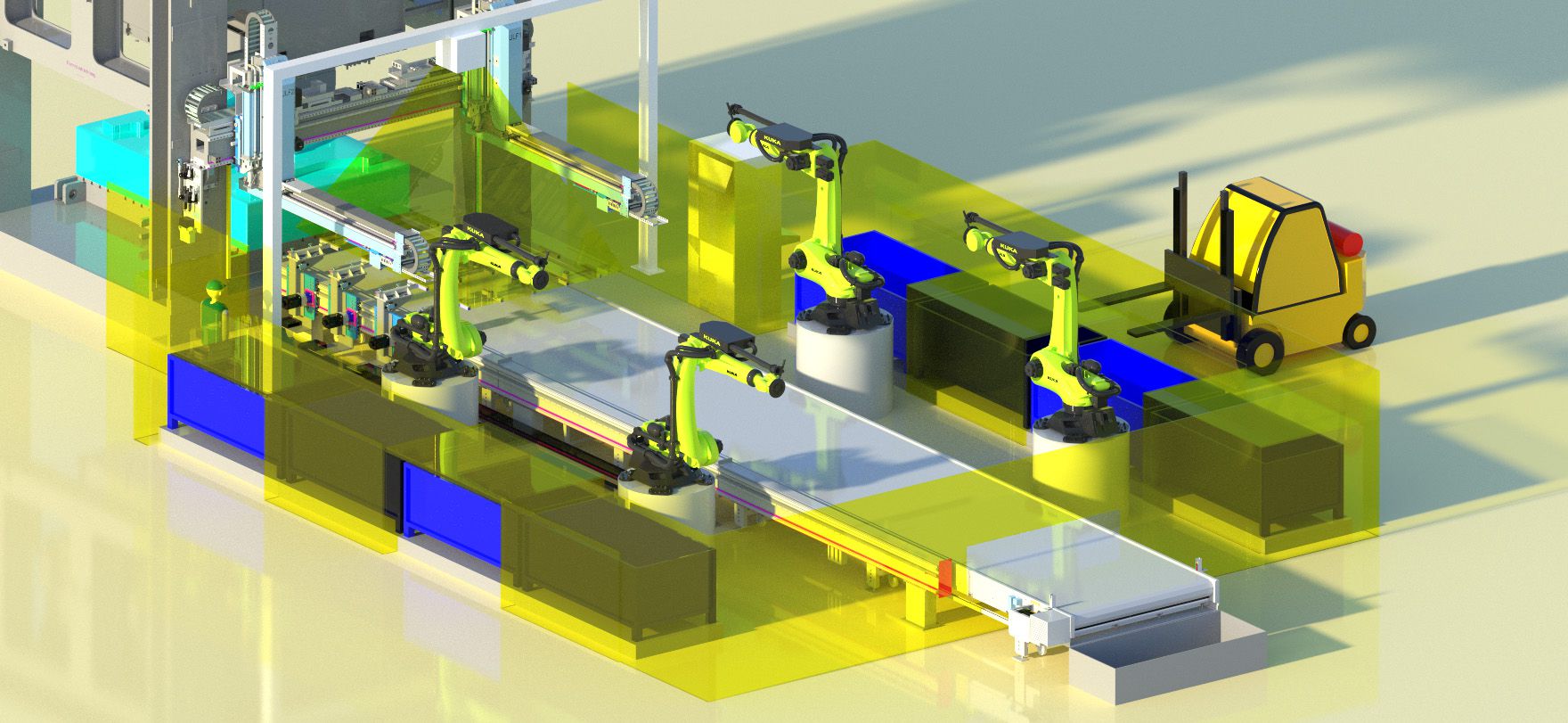
We offer complete automatic stacking systems for hot forming/press hardening in the end-of-line (EoL) area. These include outfeed conveyors, shuttle systems with storage nests, optical layer detection, standard robots, and multiple stacking stations.
The stacking of the finished parts takes place automatically and without interruption when the stacking boxes are changed. The high degree of automation ensures consistent availability and direct added value for our customers.